



 24 / 110

24 // iberian.propery / 2017
dossier// ISSUE: TOP IBERIAN Investors
For the first half of 2017 propertymarkets in Iberia
have continued to perform strongly, supported
by an economic recovery that is driving increases
in occupancy rates and rental levels. GDPgrowth
forecasts remain positive: 2.0% for Spain, 1.2% for
Portugal for the period 2017-21, remarking the
different paces of both countries but with com-
mon features such as improvements in internal
demand and falling unemployment.
In this context, international capital continues to
flow into Iberia. Investors remain attracted to Span-
ish and Portuguese real estate, as both countries
still offer rental growth prospects and an attractive
yield premium over other markets in Europe.
There are, however, some challenges that in-
vestors are facingwhen building up their Iberian
portfolios. Perhaps the most relevant has to
do with the access to quality product, which
is becoming difficult and competitive as the
existing available stock is not enough to satisfy
an increasing demand. In order to overcome
this, investors need the support of strong local
teams and partners who are able to identify the
right product/opportunities that will help them
to execute their investment strategies.
Another consideration is that as yield com-
pression has already taken place and rental
growth is priced into property values, the skills
and ability of the Asset Management teams to
execute business plans in accordance to under-
writing assumptions and identifying new levers
for growthwill become key to extract value from
the portfolios and deliver performance.
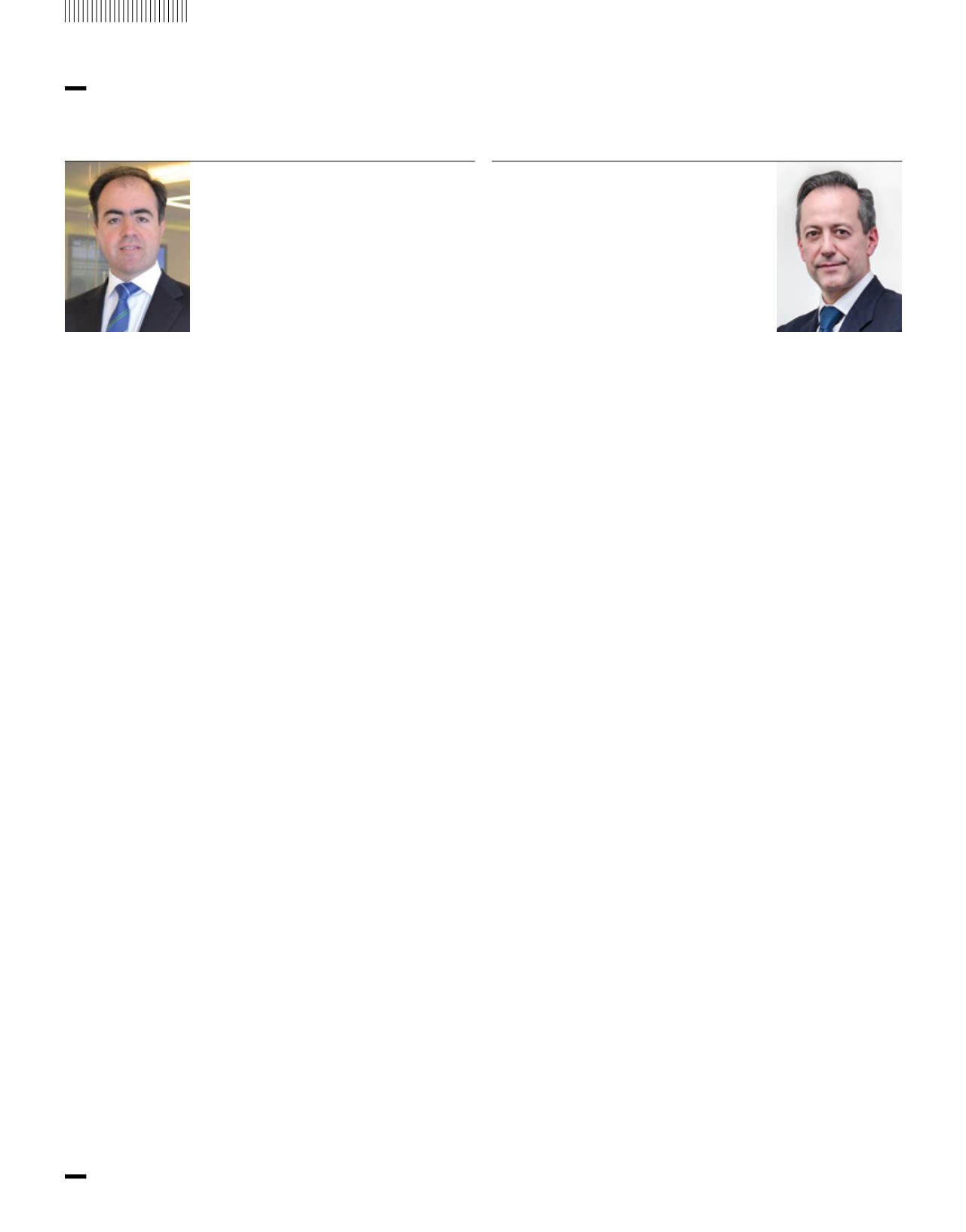
Antonio
Simontalero
CBRE Global
Investors
Head of Investment
Operations Iberia
During the first years following the crisis, many
opportunistic deals were made in the Iberian
market, but the establishment of Socimis gave
way to more value-added and core plus deals,
due to the their different returns requirement
and the great number of deals closed.
Today, the challenges will depend on the type
of return required. Opportunistic has become
more difficult, unless new projects are devel-
oped, namely residential projects where some
of the key players have already been accu-
mulating land at good prices. Sareb in Spain
and banks in general continue to have a heavy
balance sheet that will lead to opportunistic
sales, but the challenge is to obtain defined
portfolios from them.
Tourism in the Iberian Peninsula has risen
considerably in the past years. There is still
a great number of hotels or hotel portfolios
that belong to individuals who do not plan to
continue the business, and the longstanding
lack of investment in these assets makes them
suitable for rebranding and refurbishing with
international operators. The challenge will be to
identify this type of opportunity and convince
the seller of this strategy.
It is still difficult for the core pockets, but it will
come in the short time.
Developing a pan-Iberian strategy has been
easier for the Socimis and similar structures
due to their required returns and type of invest-
ment. To develop a truly pan-Iberian strategy it
is helpful to be represented in both countries,
either by affiliates or operating partners with a
good local presence and knowledge.
Pedro Abella
Langa
H.I.G. European
Capital Partners
Principal