
SPANISH REAL ESTATE VEHICLES & FINANCING

On 11 February, Capital & Corporate and Iberian Property joined forces to launch the first edition of Spanish Real Estate Vehicles & Financing, hosted at Fundación PONS in Madrid. Designed as an invitation-only oval session, with the support of BNP Paribas Real Estate, Clifford Chance, and Hines, the initiative gathered 50 senior leaders from Spain’s real estate and financial sectors, creating a focused environment for strategic debate at a moment when capital markets are recalibrating expectations.
The opening macro-overview, delivered by Manuel Porras, Head of Global Markets Iberia at BNP Paribas, set a cautiously constructive tone. Beyond the geopolitical noise, the bank sees 2026 as a potentially positive year. Yet three risks hover in the background: trade tariffs, artificial intelligence and inflation. The divergence between announced and implemented tariff policies remains manageable for now, but a narrowing of that gap could destabilise global trade flows. AI investment multiples, meanwhile, have yet to translate into measurable productivity gains — a mismatch that could weigh on growth if not resolved. Inflation remains the most immediate financial variable: should the US economy overheat, the Federal Reserve may hold rates steady for longer, keeping the cost of dollar-denominated debt structurally high. In Europe, by contrast, rates are perceived to be closer to equilibrium.
From a market perspective, Ignacio Martínez-Avial, CEO of BNP Paribas Real Estate in Spain, pointed that the country continues to outperform. After 2.8% GDP growth in 2025, expectations for 2026 remain robust at around 2.3%, well above the eurozone average. Investment volumes reached €15.3 billion last year (excluding corporate deals), with 58% allocated to living. Even stripping out residential, Spain recorded growth of 40%, sharply contrasting with Europe’s 9%. Yield compression of approximately 25 basis points among the majority of sectors reflects renewed confidence, while value-add and core-plus strategies dominate allocations.

From a structuring standpoint, Pablo Serrano de Haro, Partner & Global Head of Tax at Clifford Chance, emphasised that Spain today offers a great variety of sophisticated vehicles for real estate investments. International investors can operate through private structures (including hold-co/prop-co schemes with effective exit taxation) SOCIMIs — with 13 listed on the main market and over 120 in total — or newer instruments such as the Spanish LTIF, which, while not tax-advantaged per se, provides significant regulatory flexibility. The recent openness of the CNMV to authorise real estate investment through venture capital funds further expands structuring optionality.
Several “hot topics” were highlighted as shaping investor decision-making. First, substance and beneficial ownership: authorities are increasingly focused on ensuring that foreign structures demonstrate genuine economic presence, with enhanced transparency and automatic exchange of information. Second, non-cooperative jurisdictions: certain territories continue to face heightened scrutiny, regardless of their formal status. Third, the treatment of latent capital gains and local capital gains tax on exit, which can materially affect underwriting assumptions. In addition, regional disparities in wealth and inheritance taxes — particularly in Catalonia and the Balearics — remain relevant constraints for private capital. Finally, VAT leakage in residential leasing structures and the growing prevalence of transactions between SOCIMIs illustrate how fiscal efficiency and structural alignment are becoming central to deal execution.

Following the keynote interventions, the session moved into a closed-door oval debate moderated by Juan Barba, where structuring, financing and return expectations were examined with notable candour.
Vanessa Gelado, Market Head of Spain, Portugal, Italy and Greece at Hines, opened the discussion by revisiting the SOCIMI regime. While acknowledging the political “noise” that continues to surround the vehicle, she underlined its structural relevance. SOCIMIs were instrumental in Spain’s post-crisis recovery and, despite regulatory adjustments over time, remain effective capital aggregation platforms. “The vehicle may tax at 0%, but the shareholder does pay,” she noted — a nuance often lost in public debate. After taking Lar España private, her firm chose to maintain the SOCIMI structure, reaffirming confidence in the model.
Pablo Serrano de Haro added that much of the perceived instability stems from political objectives rather than technical flaws and suggested that the SOCIMI regime should evolve to better accommodate emerging segments such as flex living and PBSA. Both agreed that listing requirements have oscillated — initially permissive, later restrictive, and now once again more receptive.
Joint ventures and alignment of interests also drew attention. The Global Head of Tax warned that mismatched exit horizons — short-term versus long-term — can materially distort IRRs, particularly when latent capital gains are crystallised upfront.
From a financing perspective, Guillermo Astorqui, Head of Real Estate Capital Market at BNP Paribas, observed sustained appetite for living assets, with a pipeline that “does not seem to end”. However, refinancing activity — especially in hospitality — is revealing tighter underwriting. Rising interest rates and uncertainty around cash flows have pushed loan-to-value ratios upward. PBSA typically finances at around 60% LTV; hotels face more volatility; while rental residential can exceed 75%, increasingly resembling development-style risk where valuation underpins credit more than stabilised income. Isolated debt fund defaults are beginning to surface.
Fernando San Juan, Head of Transactions of Invesco, highlighted the widening gap between value and price, particularly in land. Construction costs continue to rise, licensing can take over a year, and rental growth is often absorbed by inflated land acquisition prices — exacerbating supply shortages. Furthemore, 60% of global capital raised today is opportunistic… ultimately, however, opportunistic investors must find buyers — institutional or private — to close the cycle. Spain, the room broadly agreed, is well positioned to deliver those exits, provided capital, regulation and fundamentals remain aligned.

Does real estate still fit on core capital strategies, or are other return sources gaining share for institutional players?
Regarding capital allocation strategy, Antonio Simontalero, Country Manager of Iberia at CBRE IM, stressed the importance of core capital returning to the market to restore depth and stability, allowing value-add investors to rotate product. Yet the question rises whether core real estate can still compete… for 7–8% returns private credit has been a strong option; for 10%, infrastructure offers clearer visibility of cash-flow. Esther Escapa, Local Head of Transactions for Iberia at BNP Paribas Asset Management, added that achieving incremental returns through core strategies now requires aggressive optimisation of debt and fixed-income components, as many core-plus strategies target double-digit performance (even though they tend not to assume it publicly).
Marta Herrero, Investment Director of Real Estate at Bestinver, shared that alternative assets are gaining weight within real estate allocations, while bonds and equities — delivering returns “almost passively” — have become formidable competitors. Nonetheless, she emphasised that real estate continues to hold strategic value within diversified portfolios, both for risk management and philosophical allocation criteria. In a declining interest-rate environment, its relative attractiveness naturally strengthens.

Does Spain compete on equal regulatory terms with other European countries?
David Iriso, Co-General Manager & CIO of All Iron RE Socimi, brought an operational lens to the discussion on tourist accommodation. Should further regulation of short-term rentals materialise, his platform would adapt by operating entire buildings rather than fragmented units. He pointed out that Flex Living is not new to them: six-month contracts have long formed part of their model, even if the company remains associated with short-stay hospitality. In that sense, Marta Herrero added that a significant proportion of tertiary landlords would willingly pivot to residential use if administrative processes for change-of-use licences were more agile — highlighting how regulatory pressure is, paradoxically, nudging supply towards housing.
For its part, Juan Pablo Vera, CEO of Testa Homes, cautioned against overreacting to headlines. Many announcements have limited practical impact. Political cycles may yet yield more development-friendly policies, particularly as younger and economically pressured demographics shift their positions. He also noted that institutional ownership still represents a minority of the rental housing market. Meanwhile, the window for unit-by-unit disposals remains open, incentivising private capital strategies.
Assuming a more defensive stance, Borja Ortega, Partner RE at Diaphanum, distinguishing between political rhetoric and administrative execution, he warned that housing will remain a political instrument for years. His firm focuses exclusively on build-to-sell, citing regulatory uncertainty in rental markets as a structural risk irrespective of government changes. Nonetheless, intervention in parts of Northern Europe is significantly more restrictive, suggesting Spain’s framework, while imperfect, is not uniquely burdensome.
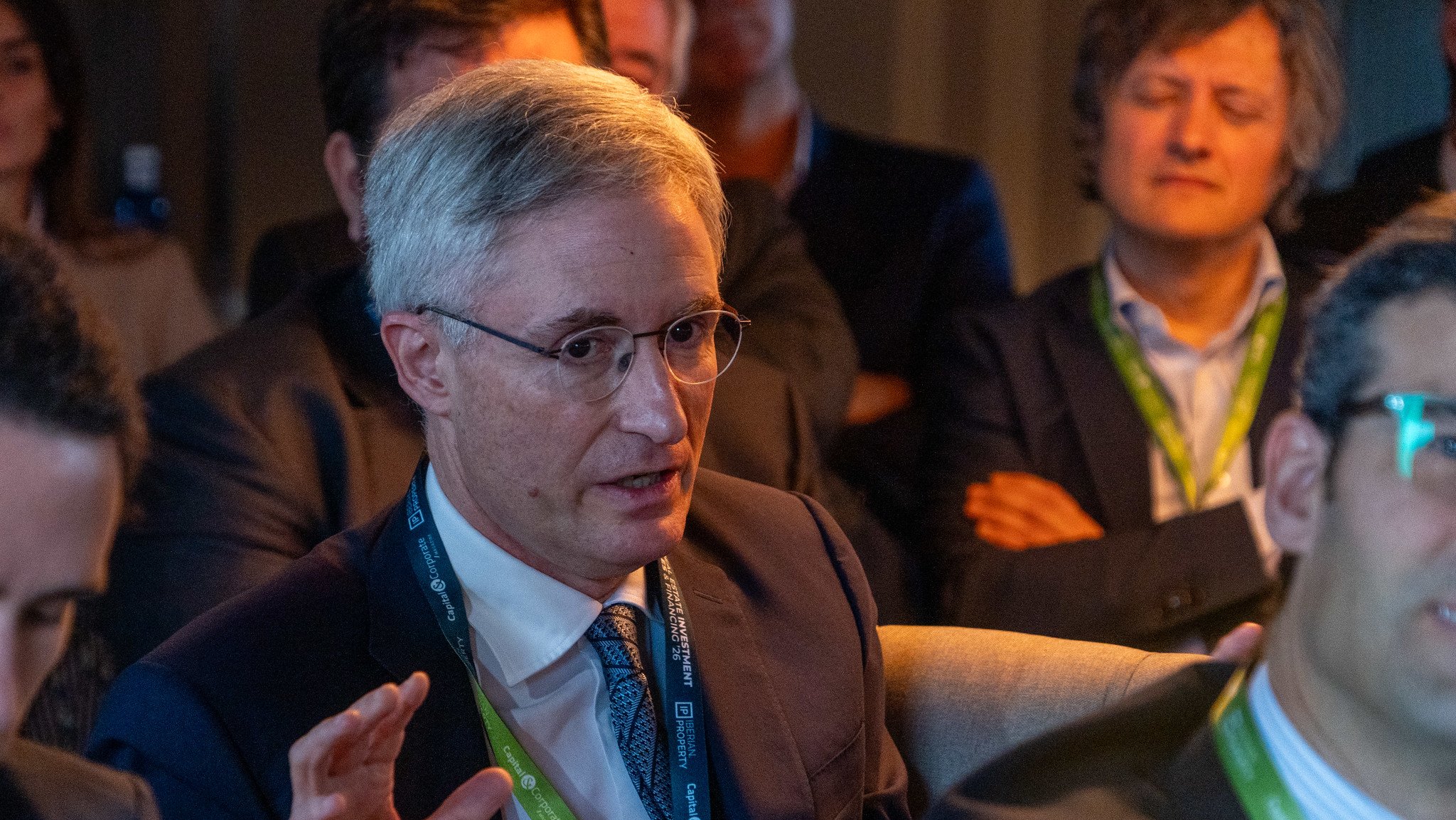
Eduard Mendiluce, CEO of Aliseda, argued for greater sector proactivity. International public-private partnership models — from the UK to Sydney — demonstrate scalable delivery and even rental moderation effects. The Spanish real estate industry, he suggested, should engage early with future policymakers and replicate models that have proven effective, citing Aragón’s strategic housing plan as a local functioning example.
Gabriel Cabello, Partner of Global Real Estate at Clifford Chance, concluded by identifying the true friction points: licensing delays and legal certainty. Beyond these bottlenecks, he argued, Spain competes on broadly comparable technical grounds with other European markets — and should not underestimate its relative positioning.
Risk pricing, alignment of interests and the fundamentals that ultimately determine performance.
On the closing stretch of the debate, Pelayo Primo de Rivera, CEO of Kefren Capital, distilled the regulatory discussion into a simple question: is risk quantifiable? In his view, a flawed but stable framework is preferable to uncertainty. Markets can price regulation; they struggle to price ambiguity.
Manuel Ibáñez, Head of Real Estate Iberia at DWS, reinforced the structural case for Spain. Investment into the country, he argued, is not cyclical fashion. Tourism and immigration are enduring demand drivers, while Spain’s international image has matured into a long-term positioning rather than a tactical allocation.
Alejandro Moya, Partner & Head of Real Estate at Incus Capital, shifted the lens to fund mechanics. Fee structures based on committed versus invested capital can create unintended pressure to deploy capital quickly, potentially distorting discipline. Alignment between general partners (GPs) and limited partners (LPs) is critical: subordinated GP commitments and fair equity close structures help ensure that if performance disappoints, both sides share the downside. “If it goes wrong, it must hurt both,” was the underlying message.
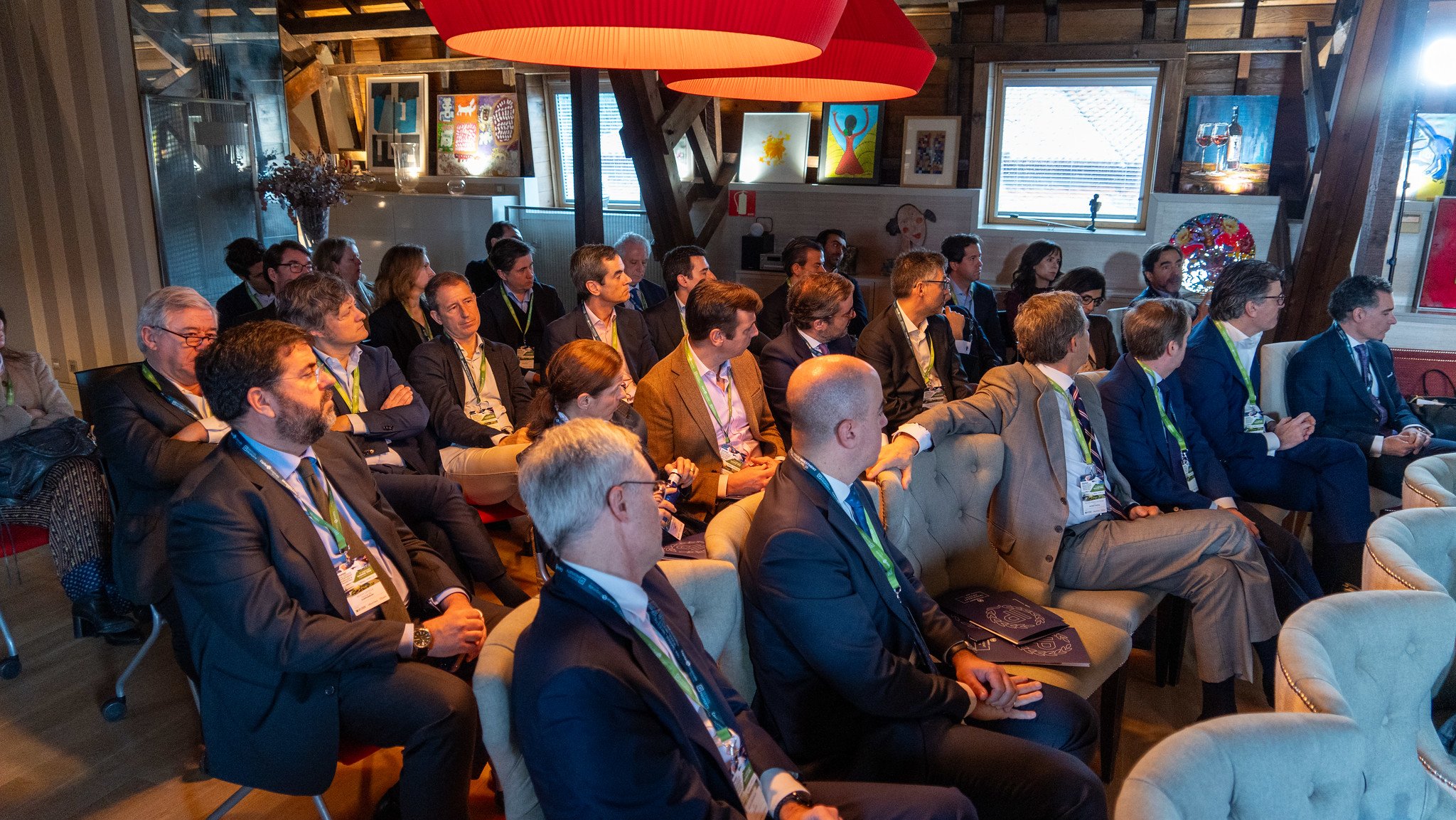
Following a similar approach, Vanessa Gelado observed that the industry’s consolidation — managers scaling up — is partly driven by LPs seeking greater negotiating leverage with GPs. Borja Ortega added that smaller players tend to focus on value creation rather than asset accumulation; when exits are binary, conviction and margin matter more than volume.
In conversations with certain US LPs, ESG rhetoric has faded. The priority is straightforward — performance. Andrés Gonzáles de Cominges, Managing Director of Citi, echoed the pragmatism from a lender’s perspective. As a debt investor, regulatory noise is secondary to country risk and macro stability when attracting international capital.
Susana Cabrera, Country Manager of Iberia at Patrizia, closed with the ultimate metric: regardless of structure, strategy or narrative, rental growth remains the decisive driver in determining who will be the silent winners.