
Portugal’s appeal: pricing, asset quality and local relationships

Portugal Real Estate Summit - 2026.
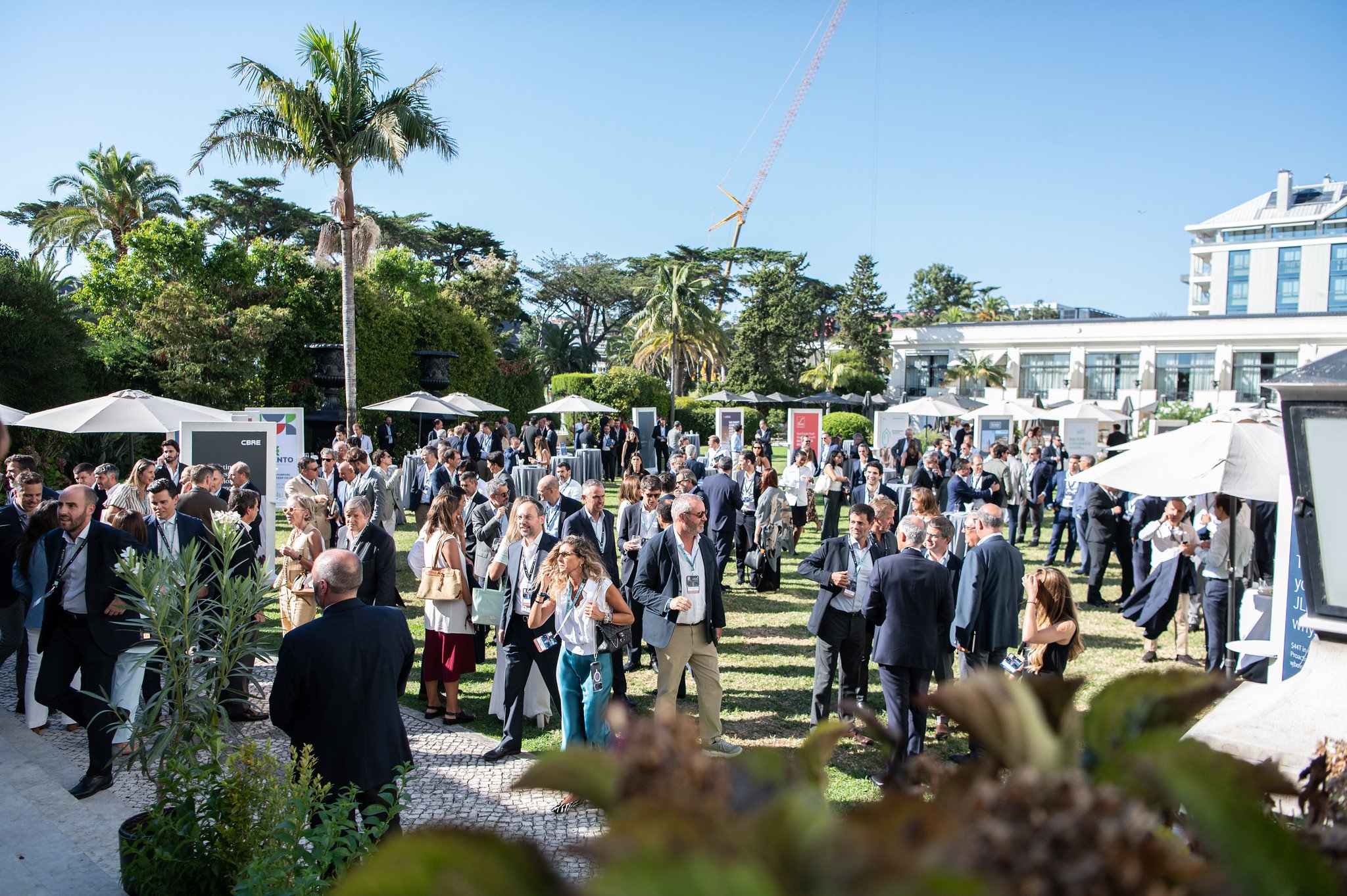
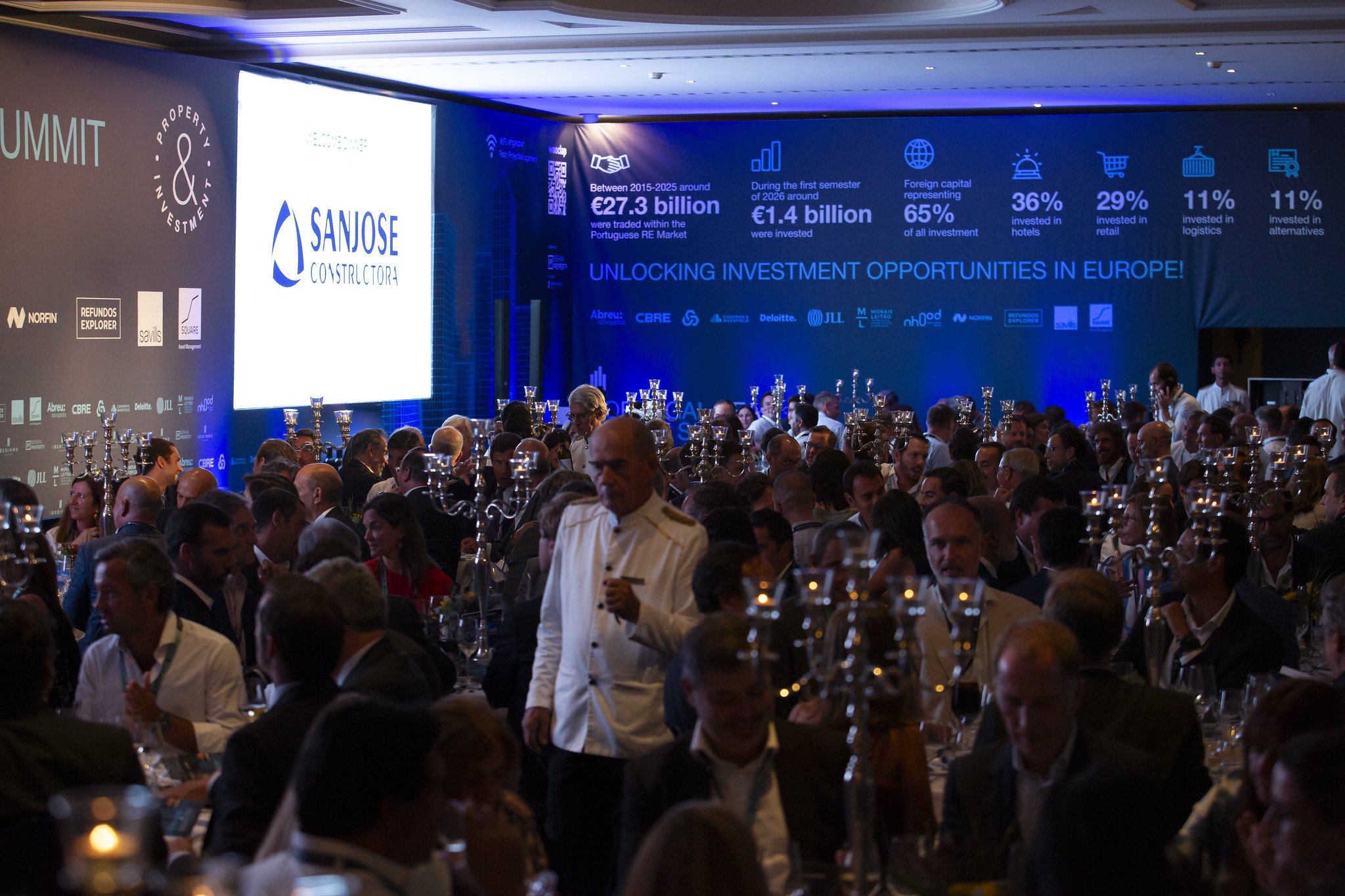
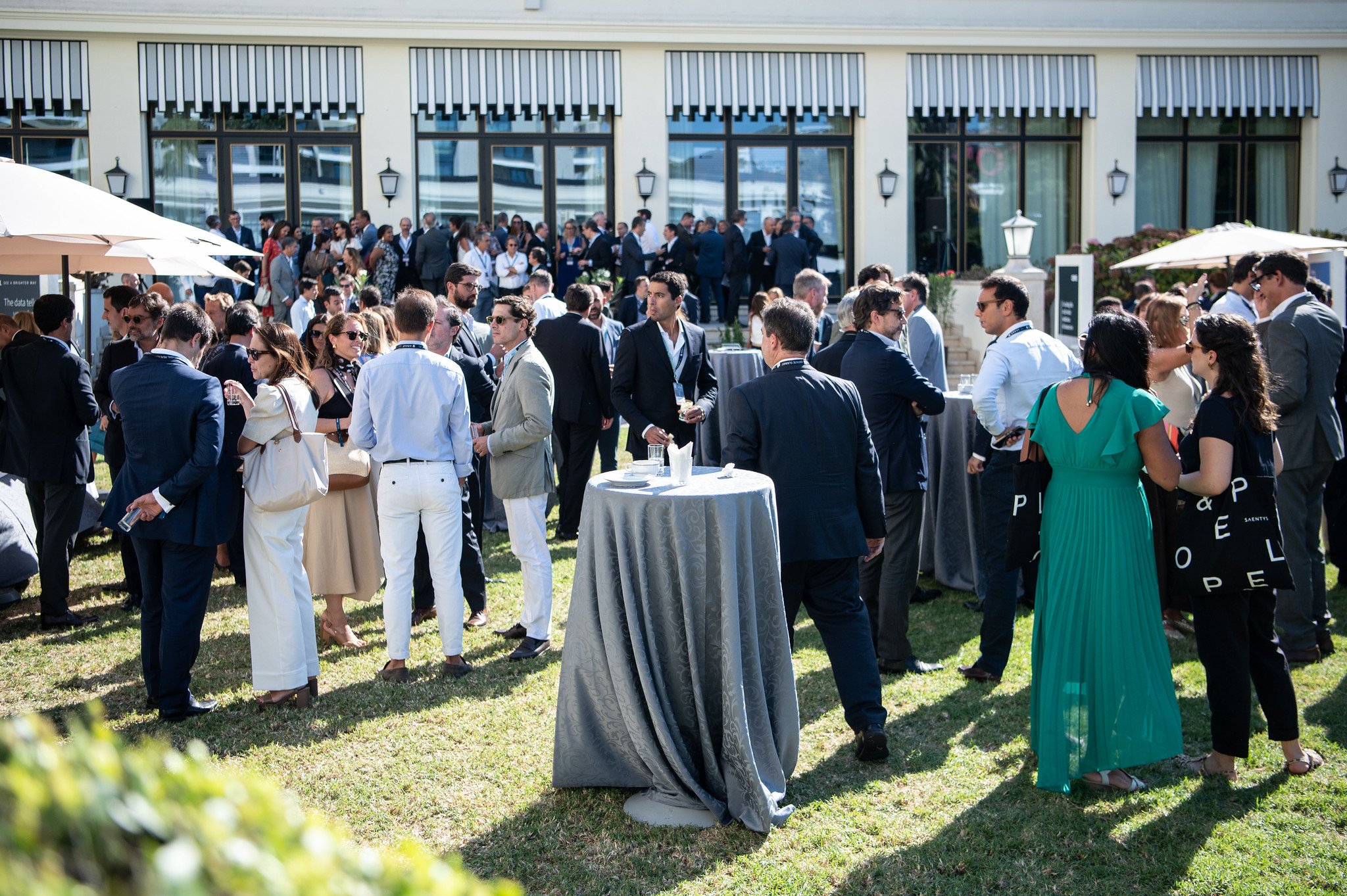
On the 14th and 15th of September, Iberian Property celebrated the 10th anniversay of the Portugal Real Estate Summit in the Hotel Palácio Estoril, an edition where the global property sector was well represented by more than 400 industry leaders from over 20 countries, keeping the tradition of having a sold-out edition.
With a fresh economic perspective, the Portugal Real Estate Summit kicked-off by the hand of Miguel Pinto Luz, Minister of Infrastructure and Housing, Portuguese Government, who assured that the pillars of the Construir Portugal (Building Portugal) strategy are in place, and made an appeal to all investors: “We want to attract more capital and developers to help overcome the market shortages”.
Access all presentations of the Portugal Real Estate Summit 2026:
One year after the announcement of the “largest package of tax and legal incentives” to accelerate private investment in affordable housing, capital is taking a fresh look at the sector.
This renewed focus on the Portuguese residential sector, with many investors considering including this market in their investment strategies for the first time, marked the 10th edition of the Portugal Real Estate Summit, which returned to Estoril, Lisbon from 14 to 15 September. Featuring a full house with more than 400 professionals of 20 nationalities, this event organised by Iberian Property brought together dozens of leaders from capital markets to discuss the major opportunities in Portugal’s next real estate cycle. And, although some challenges still persist, most of these players agreed on one point: housing, in its different formats, is currently one of the segments attracting the most interest.
Government wants to mobilise private investment
Housing was one of the key topics in this year’s program, bringing to the stage the minister of Infrastructure and Housing, Miguel Pinto Luz. Participating in the opening session, Pinto Luz explained this Administration’s strategy to trigger “a supply shock” and mitigate the housing crisis, within the program “Construir Portugal” (Building Portugal).
The opening message was one of confidence. Assuring that 90% of the planned measures have already been implemented, Miguel Pinto Luz stated that “we’ve put everything in place for the market to react”, underlining that the players in this sector currently count on “more predictability and less ambiguity” as well as a legal framework that drives investment in housing. But it was also a message of realism: the market does not respond immediately, the results will take some time to be felt, and the country still needs 300.000 more homes.
To achieve this, the plan combines short- and long-term measures. In the short term, the Government focused on direct social support for those most in need and on measures that stimulate demand, such as the State guarantee, and exemption from IMT (property transfer tax) and stamp duty on home purchases by young people up to the age of 35. “Sometimes we have to create short-term measures that may even seem paradoxical, but young people need strong incentives and access to housing, and we don’t want them to emigrate”, the minister explained. And he guaranteed that the results are clear: more than 100.000 young buyers bought homes in the last year and a half, with an average ticket of 200.000 euros.

However, Miguel Pinto Luz admitted that supply is still falling short of these incentives for demand. And this is where the long-term strategy comes in, based on three pillars. The first are incentives and exemptions on taxes such as IRC (income tax), VAT, IMI (municipal property tax) and AIMI (additional property tax), “ensuring predictability for all investors who charge moderate letting and sale prices” [between 400 and 2.300 euros per month in the case of rents, and up to 680.000 euros in the case of sales]. The second is licensing reforms, through the revised Legal Framework for Urban Development and Building Operations (RJUE). The third measure involves amendments to the urban lease law, to clarify the rules applicable to longstanding rents and new leases.
Indeed, predictability is the common thread across all these measures, and it was a recurring theme in conversations with the sector. Therefore, the minister emphasised, the program wasn’t designed in the boardroom, but rather on the frontlines and across all stakeholders, from developers and investors to municipalities and the banking sector.
At the same time, the State wants to do its part. “We believe in this market, but we are also aware of the major supply gap in public housing. And we won’t be able to rally the private sector if we don’t do our part. This is why we are undertaking the largest investment plan in public housing of the last 50 years”, stated Miguel Pinto Luz, underlining that “in addition to 40.000 homes already delivered and to be delivered until the end of this year, and another 50.000 homes under development and due for completion in 2027, our medium- and long-term plan is even more ambitious”. The goal is to create 133.000 more new public housing units in the next five to six years.
The next step joins the two fronts, public and private. “In the middle of next year, we want to have the first Investment Contracts for Rental Housing in force, under which the State provides the land or properties with the licensing in place, and private investors handle the construction and everything else”, adding that “Estamo [the State’s real estate asset manager] is already working with the municipalities to facilitate the transfer of the properties that we have identified for this purpose”.
In the end, he summarised, “we want to attract more capital and developers to help overcome these market shortages” and for this the Government will maintain “a close relationship and dialogue with the private sector, so that we know what needs to be fine-tuned or improved throughout the entire process. Because this formula must be a success!”.
Demand has changed, and the market must also adjust
The Government’s appeal is reflected in the market figures. At the joint presentation that launched the program, the ‘living’ segment was identified as one of the asset classes with the greatest growth potential in Portugal, driven by sociodemographic changes that are reshaping demand. “61% of Portuguese households are comprised of just one or two people, which is a radical and structural change compared with a few decades ago”, noted Paulo Sarmento, Head of Portugal at Cushman & Wakefield. Nevertheless, Portugal seems to be lagging behind Europe in this new cycle: “in Spain, the living sector has already attracted more than twice the capital allocated to real estate investment in Portugal”, he exemplified.
Part of the explanation lies with Build-to-Rent, which has yet to take off in this country. “Until now, most of the investors in multifamily housing have chosen the Build-to-Sell (BTS) model because the returns compared with BTR are unbeatable”, noted Augusto Lobo, Head of Portugal Capital Markets at JLL, revealing that in the last five years there were almost no BTR operations in Portugal. But he believes this scenario is about to change: “we expect this trend to be completely different in five years, because we now have major players like Sonae Sierra and Ageas taking their first steps in this market. And the Government programs should start to deliver land at lower prices, which are the two essential conditions for investment in this sector to finally take off”. There is plenty of room to grow, as there remains a shortage of 220.000 homes.

And the potential extends beyond BTR. “In a few years, at least 67.000 new beds will be needed in Purpose-Built Student Housing (PBSH), which will involve an additional investment of 4.5 billion euros”, Paulo Sarmento noted. In senior housing, the current supply, managed above all by IPSS, is also insufficient: “just to meet today’s potential demand (citizens aged 80+) another 70.000 beds will be needed in Portugal over the coming years, which represents an additional investment of 3.4 billion euros”, added Augusto Lobo.
From living to hospitality, optimism remains high. According to Augusto Lobo, the RevPAR in Portuguese hotels grew 47% since 2019, and there is still room for growth, as the principal operational indicators remain below competing markets such as Spain and Italy. And there is also opportunity on the supply side: “approximately 80% of the hotels with more than 50 rooms operating in Portugal are owned by families or small owners. Many of these are hotels that the second or third generations no longer want to keep managing”. Therefore, Augusto Lobo believes that most of this stock will reach the market in the coming years.
BTR is an opportunity, but the market “is still consolidating”
Following the interview with the minister, the roundtable “Residential – new policies & incentives” brought together developers, investors and the banking sector to discuss whether the Government measures are enough and who will finance the next phase of housing development. The potential is real, but “the market is still consolidating”, observed Francisco Ravara Cary, Deputy CEO of Caixa Geral de Depósitos. And this opinion was shared by the CEO of Krest Investments, Claude Kandiyoti, who remains agnostic regarding asset classes, but recalled that “today’s market is very different than ten years ago: it’s much more mature, more structured and more institutional”. Nonetheless, “there is much to build and much value to create, namely in BTR”.
A model that Sonae Sierra knows well, as one of the pioneers of BTR in Portugal. “The fundamentals drive us. But the market still has to prove itself; in other words, we not only have to create product, but also an investor-friendly ecosystem to attract institutional investors. Portugal is just getting started, but the Government’s measures are positive to help make it happen”, considers Alexandre Fernandes, Executive Director - Developments at Sierra.
Creating this ecosystem requires financing, and this is where banks are still cautious, as Francisco Ravara Cary admitted, revealing that almost all of CGD’s credit portfolio for housing development is aimed for BTS projects and that, regarding BTR, the bank considers operations “when there is a public entity bearing the risk”.

Construction costs brought another key word to the debate. “Predictability is essential for any investment”, emphasised Jacinto Rey, Vice-Chairman of SANJOSE Group, citing Comunidad de Madrid’s Plan Vive as a positive example. And, to ensure predictability, Rey has no doubt that “it will be impossible to meet this market’s needs, at the necessary speed and budget, by relying solely on traditional construction methods. There is no single magic formula, but industrialised construction is without doubt the way forward”, and the key factors for these projects to succeed is planning, scale and less red tape.
Claude Kandiyoti agreed. “In a world where there is already so much uncertainty, we need to bring more predictability to our projects and, in terms of construction, this isn’t always possible”, he stated.
The problem is that predictability also depends on how the new rules will be applied. “It’s still early to assess the actual results of the shock proposed by the Government”, Francisco Ravara Cary said. “There are several examples from the past in which bureaucracy blocked the effectiveness of some measures. And there’s still the issue of instability, as it has been quite common for rental laws to change when the Government changes, and this is one of the fears of many investors”, he recalls.
The race for data centres enters a new phase
From housing, the debate moved on to digital infrastructures, with Portugal increasingly competing for major data centre projects. Ana Quelhas, EVP Hydrogen and Data Centres at EDP Renewables, believes that the fundamentals are in place, from a largely decarbonised electricity system to talent, and initiatives like the national plan for data centres show that the authorities are aware of the scale of this opportunity. “We have all the ingredients. Now we just need to be smart to maximise them and attract investment”, she stated.
And this potential has already left the drawing board. “Whereas before the message was that we had major potential on paper, now we have projects on the ground, which give us credibility and confirm that the potential is real”, assured Filipe Barreiro, Director of Operations at Start Campus, which has 36 MW in operation in Sines and is developing a second building with a capacity of 200 MW, in a campus that is expected to reach 1.2 GW. And, unlike the former, this one is already being implemented with guaranteed clients.
The institutional commitment is even more visible in the case of Merlin Properties. The CEO, Ismael Clemente, disclosed that this SOCIMI is developing approximately 200 MW in Portugal, with almost 500 million euros of capex already invested, a figure that should surpass one billion until December of next year and reach 2.2 billion in December 2028. This strategy involves building and owning a platform of data centres, rather than negotiating individual assets. And, as Clemente notes, the profile of demand is shifting rapidly, which means that investors are financing infrastructures for a client base whose power density and technical requirements are changing substantially.
Compared with Spain, Portugal has the upper hand politically: “overall, the Portuguese Government really got it”, this executive stated, referring to the national plan for data centres, considering that in Spain the political tone surrounding the sector is more inconsistent.

Filipe Barreiro also noted that, at this scale, the environment surrounding the asset becomes part of the investment equation, citing the example of Sines, where various projects under development will potentially bring up to 15.000 people to a city with around 30.000 inhabitants. Therefore, housing, logistics and talent become practical variables in the capacity to deliver. “If we want to attract the talent we need to Sines, we need to create the conditions to attract them, as well as their families.”
The same is true for the power grid. “Projects on this scale have a wide-ranging systemic impact”, underlined Ana Quelhas. The traditional network was designed for major production centres and widespread consumption, but data centres create the opposite scenario, with loads at the level of gigawatts of a country whose consumption is around 10 GW. The existing connections must be optimised, but it will also be necessary to invest in new networks and generation capacity.
“We have GW-scale demand in a country that has a big load of 10 gigawatts, so it's really a systemic impact" - Ana Quelhas, EDP Renewables.
The rapid advancement of AI raises another question among investors: could these buildings become obsolete before the end of their economic life? According to Ismael Clemente, obsolescence occurs when the building can no longer accommodate the weight, power consumption or cooling requirements of the new equipment, but increasing the power density may even reduce the spatial needs: the traditional 12 kW racks have transitioned to 60 kW and, with liquid cooling, to 120 kW, which, in practical terms means using one-tenth of the space. For the landlord, the key point is that the building is able to accommodate successive generations of technology.
The logic concerning location is also shifting. “Energy and grid capacity are more important”, Clemente summarised. And even the rental has changed: clients no longer pay for the space, they pay for the power allocated, Filipe Barreiro recalled.
So where does the investor come in? Upstream, land and energy offer an attractive development position, Clemente pointed out; they can participate, directly or indirectly, in construction and operation; and banks can fund assets with project finance structures. And then there is the edge data centres, from 1 to 2 MW, which are closer to the user and in an urban environment, and accessible to investors who are unable to commit the capital required by hyperscale projects.
Portugal is no longer for sale: “Portugal sells”
On the second day of the event, Francisco Horta e Costa, Managing Director of CBRE Portugal, and Pedro Figueiras, Head of Lisbon at Savills, presented the opportunities currently opening up in Portugal’s tertiary real estate sector. In the end, the conclusion was clear: as the risk perception of Portugal shifted over the last decade, the country started to attract new demand profiles across all sectors; and in the wake of immigration, the consumer base has expanded substantially. Furthermore, today’s investors buy across the board and are no longer limited to core product. “From the coattails of Europe, the country has moved to the crest of the wave”, Francisco Horta e Costa concluded.
In addition, as Pedro Figueiras noted, the lack of available grade A product is today a common denominator across almost all the tertiary sectors, resulting in record-low vacancy rates and, consequently, competition between tenants, thus driving the continuous rise in rents. “And this is the market where we should keep working in the coming years”, he predicted. Or, as Francisco Horta e Costa summarised, “Portugal is no longer simply for sale, Portugal sells”.

Ugly ducklings and swans: international capital is more selective
If the consultants presented the picture of a market lacking product, international investors explained their perception of it. The roundtable “The Ugly Ducklings and the Swans: the Iberian cycle” brought together Vanessa Gelado, Senior Managing Director and Head of Southern Europe at Hines, Yassine Berkane, Managing Director of Tristan Capital Partners, and Colman McCarthy, Partner of Signal Capital Partners. According to Vanessa Gelado, the starting point involves separating market sentiment and fundamentals: “when we operate in a market, we must focus on its fundamentals and forget all the ‘noise’ around us. When the fundamentals are there, so is liquidity”.
And liquidity was precisely the topic that marked the participation of Colman McCarthy. When Signal started operating in Lisbon between 2015 and 2016, the market was much cheaper and there was little international capital, which enabled relatively small investors to build relationships and reputations much more quickly than in Madrid, Milan or Paris. But what makes the market attractive to enter, such as limited competition, can become an obstacle to leave it. Today this asset manager owns two core, central offices, which account for some of the highest rents in Lisbon, between 32 and 35 €/sqm, and which currently lack institutional capital willing to pay the asking price. Instead of selling at a discount, the firm increased its leverage and retains the option to extend the fund’s duration, McCarthy explained.
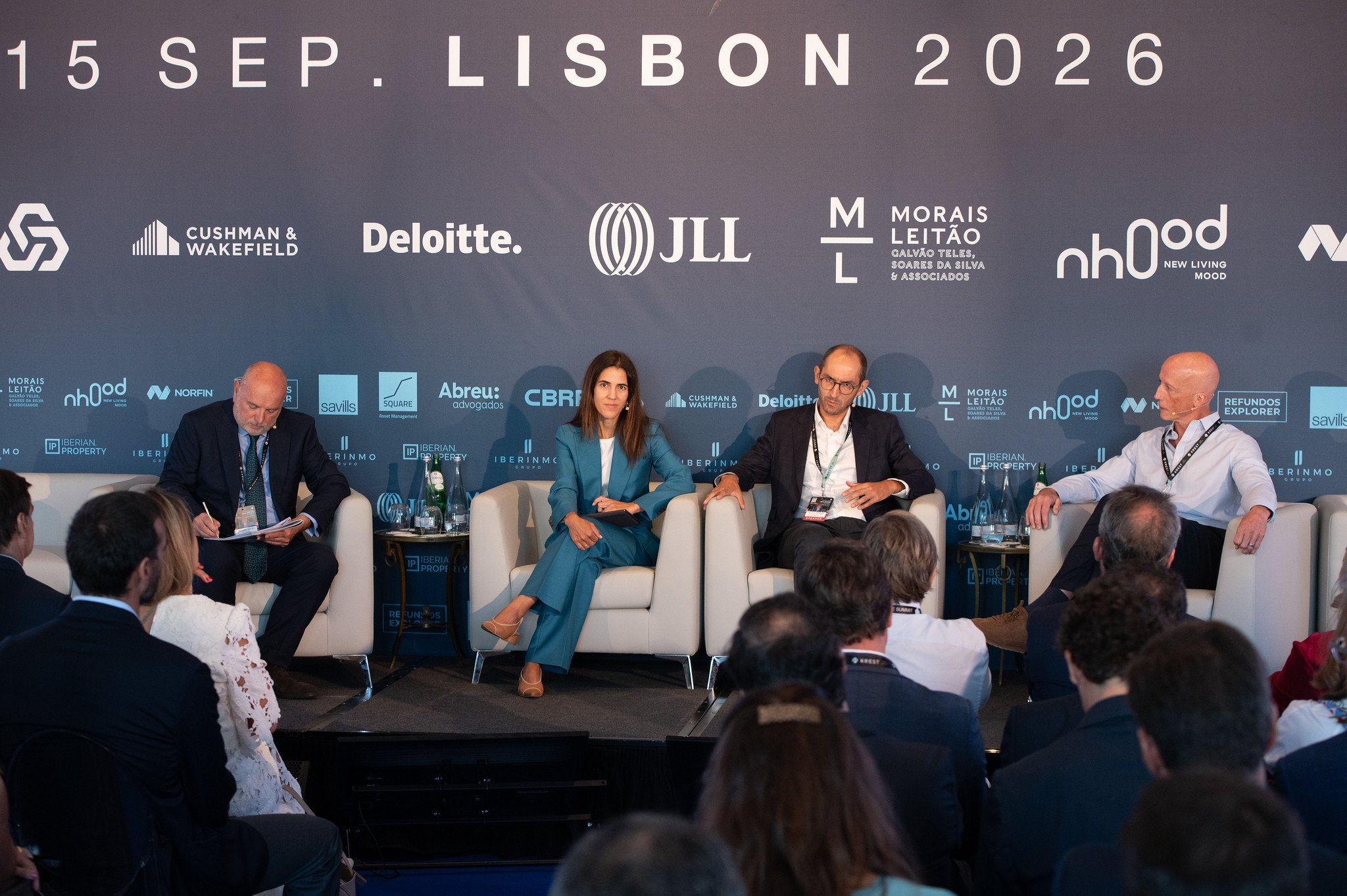
Tristan also focused on offices in Lisbon, where it began operating in 2019 with the Vision portfolio. According to Yassine Berkane, the proposal combined the decrease in vacancy rate, lack of institutional investment in capex on the existing stock and an attractive entry price relative to the assets’ quality, but it also required believing in the city and a local partner, Norfin. With the buildings now close to 95% occupancy, this manager increased its NOI by approximately 50%, thanks to new leases at market rates and relatively modest capex interventions. “We really believe in Lisbon and the Portuguese market, but there is still a lack of institutional investment”, Berkane underlined.
And who are today’s swans? According to Vanessa Gelado, retail: the quality segment survived three successive tests, namely, e-commerce, the pandemic and the combination of inflation and rising interest rates, and Hines sees opportunities where limited supply is combined with population growth and resilient consumption. “We love retail”, she concluded. On the other hand, Tristan sets its sights on sectors where supply and demand are clearly unbalanced, such as logistics and urban hotels.
Transforming real estate into growth capital
Between the two investor roundtables, there was also time to look at real estate from another angle, namely, the companies that occupy it. In an individual intervention, Abel Mascarenhas, chairman of the Board of Directors of Fomento Fundos (Fomento SGOIC), presented sale-and-leaseback solutions as a way to release capital from properties to invest in growth, without losing their usage. “We’re not here to finance real estate; what we want is to fund the next investment cycle. We want Portugal to move forward”, he stated, indicating tourism and industry as strategic sectors and the intention to expand operations to logistics and healthcare.
How are international investors underwriting deals today?
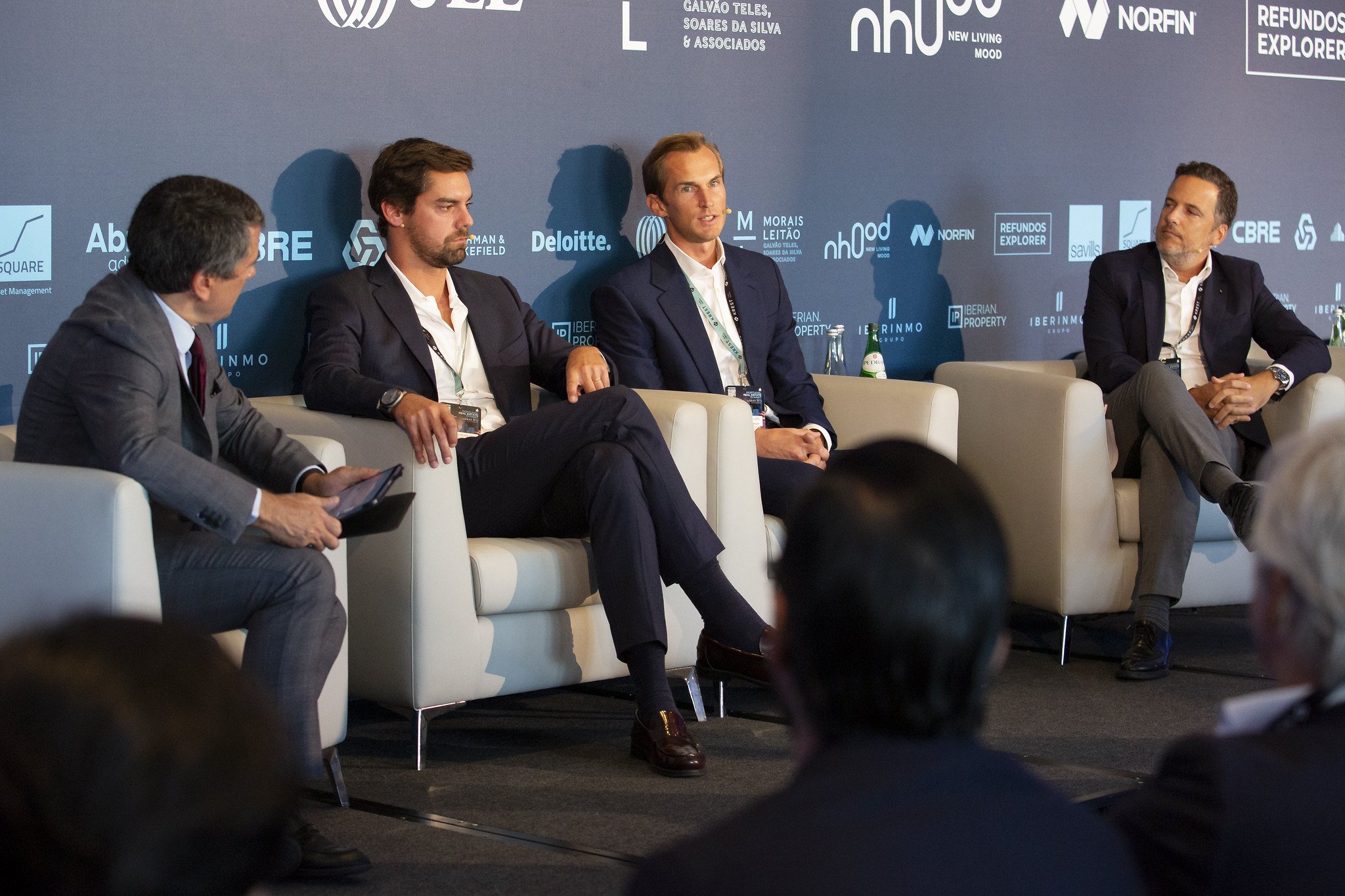
For international real estate investors, the question is no longer whether Portugal deserves institutional capital. The more difficult question is how much capital the market can absorb, where it can be deployed at sufficient scale and liquidity, and what return premium is required to compensate for the country's smaller transaction universe. That distinction was at the heart of the “Capital allocation across geographies” round table that brought together Francisco Fezas Vital, Managing Director at Blackstone, Jonathan Willén, Founder & CEO of Europi Property Group, and Antoni Sastre Cuadri, Head of Transactions and Valuation for Spain & Portugal at Zurich, moderated by António Gil Machado, Partner at Grupo Iberinmo.
The three investors represent markedly different pools of capital and investment approaches. Blackstone has been investing in Portugal since 2015, initially through logistics and retail and now across a broader portfolio that includes hotels, while Europi has built a roughly €1 billion portfolio since 2019, ow present across eight markets, with Portugal its second-largest market after the UK. Zurich, meanwhile, approaches the market through the more defensive lens of insurance capital, with offices and retail historically at the centre of its Iberian allocation and a growing interest in living.
If you had €1 billion of fresh European capital, how much would go to Portugal?
There was no single answer because the allocation depends fundamentally on the type of capital being deployed. Antoni Sastre Cuadri put a number on Zurich’s potential exposure, suggesting that a pan-European fund could allocate around 5–10% to Portugal, rising to perhaps 15–20% if the comparison were narrowed to Southern Europe. But the more important issue, he argued, is not whether Portuguese real estate merits capital — it does — but whether the market can absorb large volumes while maintaining the liquidity and institutional quality required by international investors.
For Blackstone, there is no predetermined country allocation. Francisco Fezas Vital said the firm’s approach is driven by the risk-return equation rather than by a target percentage for Portugal. The firm has committed significant capital to the country through its last three funds, but that does not establish a ceiling or minimum for future allocations. If the right opportunities can generate the returns Blackstone requires, capital can follow; if those opportunities are not there, the allocation can fall regardless of how attractive the country may appear at a macro level.
That flexibility is important in a relatively small market. Portugal can be an important destination for international capital without necessarily becoming a large percentage of a pan-European portfolio, simply because the amount of investable product and the depth of the buyer universe remain more limited than in Europe's largest markets.
Is Portugal’s appeal about pricing, competition or local relationships?
For Jonathan Willén, it is a combination of factors, but relationships and market access have played a particularly important role. Europi has grown from zero to around €1 billion of assets across eight markets since 2019, with Portugal becoming its second-largest market after the UK. The firm's Portuguese portfolio spans logistics, the LX Factory in Lisbon acquired in 2022, a new 11,000 sqm office development in Alcântara and a residential platform focused on Lisbon, particularly Alcântara.
The advantage of operating at a smaller scale is that Europi can lean into opportunities without moving the market itself. Willén described Portugal as a market where the firm has been able to make the most of opportunities when they appear, supported by local relationships and partners. “This industry is about relationships,” he said, while also pointing to the broader attraction of Portugal, from quality of life to the ability to build a meaningful position without becoming constrained by the scale of the market.
That local access is particularly important in a market where opportunities are often more granular than those available to the largest institutional investors. Europi's strategy has been to work with local partners, aggregate smaller investments and eventually create platforms of sufficient scale to attract larger institutional capital.
Which sectors are attracting the next round of capital?
For Blackstone, logistics remains firmly in the investment programme. The combination of low vacancy and successful execution across acquisitions, leasing and disposals has created an internal track record that supports further deployment. The strategy is not simply to accumulate assets, however: Fezas Vital stressed the importance of selling as part of the investment cycle, pointing to two logistics portfolios sold in the previous 12 months for a combined valuation of more than €150 million.
Residential is the other major area of interest. Blackstone already has substantial residential exposure elsewhere in Europe but has yet to find the right opportunity to enter the Portuguese market at scale. The firm is actively looking at build-to-sell and remains interested in build-to-rent, although the latter presents a particular underwriting challenge because there are still relatively few comparable institutional portfolio exits in Portugal.
Data centres also remain on the radar. Together, these sectors reflect a broader search for structural demand and constrained supply rather than a simple preference for traditional asset classes.
For Zurich, the threshold is considerably more structured. Sastre Cuadri described insurance capital as patient and long-term, but also highly disciplined, with three principal dimensions determining whether an investment can pass the underwriting process: income durability, liquidity, and the combination of location, asset quality and ESG credentials.
The first requires confidence that income can survive multiple economic cycles. The second is perhaps more challenging in Portugal: even a long-term investor needs to know that there will be a sufficiently deep buyer universe when an exit eventually becomes necessary. The third brings together the physical quality and location of the asset with its sustainability characteristics.
The consequence is that falling yields cannot simply be assumed as a future source of returns. With government bond yields and risk-free rates having changed the relative pricing of real estate, Zurich needs to find upside through the underlying fundamentals — particularly rental growth and reversionary income — rather than relying on future yield compression.
For Sastre Cuadri, liquidity is therefore one of Portugal's central institutional questions. The market is smaller than its European peers, there are fewer large transactions and fewer opportunities to trade Grade A assets at scale. Zurich analyses opportunities by city rather than simply by country, but the depth of the eventual buyer universe remains a fundamental part of the underwriting.
What happens inside investment committees when a Portuguese opportunity arrives?
Liquidity is again central to Blackstone's analysis. Fezas Vital acknowledged that Portugal cannot offer the same depth of liquidity as Germany, the UK, France or the US, but argued that Blackstone's own track record has helped demonstrate that institutional exits are possible.
The clearest example is the firm's acquisition of a shopping-centre portfolio in 2015, which it sold three years later for roughly €1 billion — at the time the largest transaction in the Portuguese market. More recently, the sale of two logistics portfolios for a combined value of more than €150 million provided another demonstration that assets can be exited when the investment thesis and pricing are right.
“You only provide a good service to your clients when you sell” - Francisco Fezas Vital, Blackstone.
That accumulated track record matters to future investment committees because it turns liquidity from a theoretical assumption into something the firm has actually demonstrated. Fezas Vital also pointed to the wider operating environment. In his view, Portugal has benefited from relative political stability and from recent legislation supporting the residential supply side at a time when some other European markets have been moving in the opposite direction. For an institutional investor, that combination of demonstrated exits and a supportive investment environment can materially influence the willingness to continue allocating capital.
Europi's answer is closely linked to its ability to make decisions more quickly and operate at a smaller, more granular level. Willén remains particularly positive on Portuguese logistics, where the firm sees opportunities in high-quality existing assets as well as selective development. But he also highlighted the complexity of planning and regulation, noting that unexpected requirements and stakeholders can appear during the development process. That is where local partnerships become part of the investment model rather than simply a sourcing tool.
The firm's approach is often to assemble smaller transactions, create something of sufficient scale and eventually offer that platform to larger institutional investors. It has applied the model in self-storage and other residential markets, generally alongside local partners. In Portugal, this creates a potential bridge between the fragmented nature of the market and the scale requirements of larger pools of institutional capital.
If the investment committee gave you 24 hours to buy one thing in Portugal, what would it be...?
Even though not so much discussed throughout the 2-day conference, Jonathan Willén closed the panel pointing to the high-end hospitality sector, driven by a broader global willingness to spend more on experiences and Portugal's combination of climate and service culture. It is not yet a sector Europi has invested in, but precisely for that reason it represents a potential new direction rather than an extension of the firm's existing Portuguese portfolio.

Over the two days, the Portugal Real Estate Summit’s agenda also included interactive breakout sessions, discussion forums that ran simultaneously and in which, honouring the event’s collaborative spirit, delegates shared opinions with investors and explored specific topics in greater detail.
Providing a space for reflection, six themed sessions took place: “New Living formats, the specialization on the resi market”, chaired by C&W; “Hospitality, the Portuguese bright future”, chaired by JLL; “Europe’s most compelling retail investment story”, chaired by Savills; “Office & Logistics, the core investment assets! (Will they remain so?)”, chaired by CBRE; “The new licensing regime”, chaired by Morais Leitão, and the session “‘Construir Portugal’ [Building Portugal], tax incentives”, chaired by Abreu Advogados.