


Barcelona Catalonia returned to the Palais des Festivals in Cannes this week with a strong institutional presence and a clear strategic message for international investors. Backed by the Generalitat of Catalonia through INCASÒL, Barcelona City Council and the Metropolitan Area of Barcelona (AMB), the platform aims to present not simply individual projects, but a coordinated narrative around land mobilisation, housing delivery, innovation clusters and metropolitan growth.
The second day of discussions at the MIPIM continued to showcase how Catalonia is positioning itself at the intersection of urban regeneration, institutional capital and science-driven innovation. Across five sessions — four hosted at the Barcelona Catalonia stand and one within the MIPIM official conference programme — policymakers, investors and planners explored how metropolitan projects are evolving from isolated developments into integrated urban ecosystems.
From the transformation of industrial waterfronts to the institutionalisation of retail capital, and from digital infrastructure to life sciences clusters, the debates highlighted a region increasingly focused on long-term structural competitiveness.
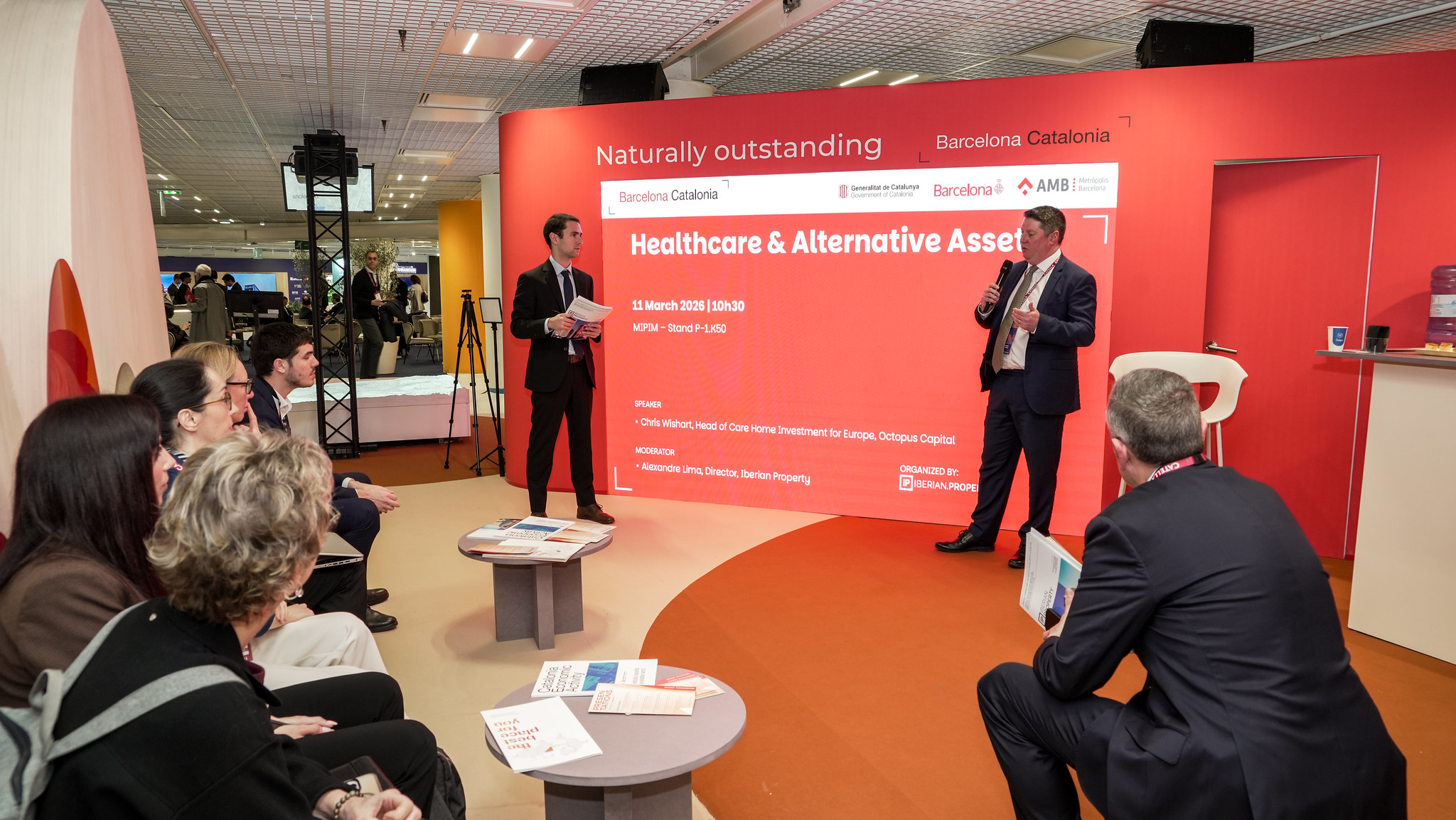
Healthcare & Alternative Assets: a game of operational expertise
Day two at the Barcelona Catalonia Pavilion opened with a discussion on healthcare real estate, a sector that across Europe is rapidly shifting from a niche alternative strategy into a structural institutional asset class. Interviewed at the Investor Talks powered by Iberian Property, Chris Wishart, Head of Care Home Investment for Europe at Octopus Capital, offered a European perspective on how ageing demographics are reshaping real estate allocation strategies and why Spain is attracting investor attention.
Octopus Capital manages one of the largest care home investment platforms in the United Kingdom and has historically focused on long-term partnerships with specialised operators. The group is now preparing to expand that strategy into Spain, with the ambition to deploy up to €1.5 billion in healthcare real estate over the coming years through an open-ended fund structure backed by institutional investors such as pension funds and insurance companies.
For Wishart, the investment thesis begins with a structural imbalance between demographic demand and available supply. Spain, like much of Southern Europe, faces a rapidly ageing population but still lacks sufficient modern care facilities. This shortage, he argued, creates a long-term development pipeline rather than a saturated market, particularly in regions such as Catalonia where urban density and healthcare infrastructure are already well established.
Octopus’ approach in Spain is expected to focus primarily on forward-funding new developments, reflecting the limited availability of institutional-grade standing assets. The firm’s strategy is also deliberately structured around a landlord model, partnering with experienced care operators who manage the day-to-day service provision while the fund focuses on the underlying real estate.
In this sector, however, the operational component is often more critical than the physical building itself. According to Wishart, evaluating the strength, experience and financial stability of operators is therefore a central part of the underwriting process. Markets with mature operator ecosystems and transparent regulatory frameworks tend to attract institutional capital more easily, as investors can rely on long-term operational stability.
Comparing Spain with more established healthcare investment markets such as the UK, France or Germany also reveals structural differences in lease structures. In the UK, care home leases can extend to 30–35 years, providing strong long-term income visibility for investors. In Spain, by contrast, lease agreements typically range closer to 15 years, reflecting a younger and less institutionalised market.
The conversation also addressed the financial parameters shaping investment decisions. While prime theoretical yields for healthcare assets are sometimes discussed at around 5.15%, Wishart suggested that in practice, development projects in Spain are more realistically underwritten at 6–7% yields, particularly when factoring in construction costs, capex requirements and operational risk.
However, Wishart also noted that several conditions would need to evolve for Spain — and Catalonia in particular — to reach the maturity levels seen in Northern European healthcare markets. Greater regulatory clarity, stronger operator platforms, improved financing conditions and deeper institutional liquidity would all contribute to building a more scalable investment environment.
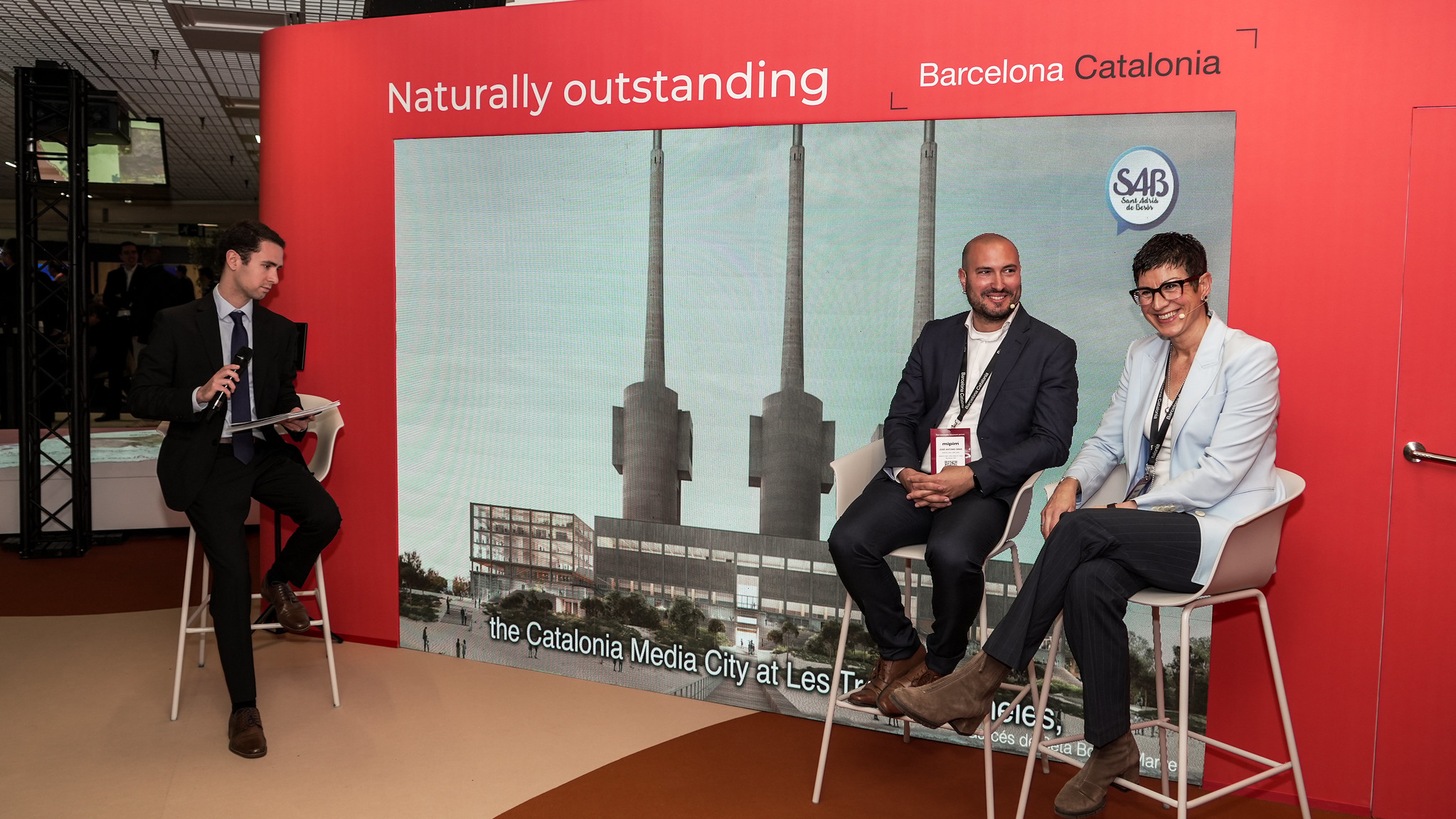
Sant Adrià de Besòs: from industrial waterfront to audiovisual and digital hub
Urban regeneration took centre stage in the morning session dedicated to the transformation of Sant Adrià de Besòs, a city historically shaped by heavy industry that is now repositioning itself within Barcelona’s metropolitan economy. In a conversation with the Mayor Filo Cañete and with José Antonio Gras Councillor for Sustainable Territory & Environment, the municipality shared its strategy to transform former industrial land into a new innovation district.
At the centre of this transformation stands the redevelopment of the iconic Tres Xemeneies, whose three chimneys have long been one of the most recognisable landmarks on Barcelona’s northern waterfront. The site is set to become Catalunya Media City, the flagship of Catalonia’s audiovisual industry strategy.
The wider regeneration programme is extensive. The project covers more than 285,000 square metres of development, combining residential neighbourhoods with economic activity and public facilities. Plans include 1,700 new homes — around 40% of them public housing — and nearly 100,000 square metres of productive space aimed at attracting companies linked to creative industries, technology and services.
For local authorities, the project reflects a broader philosophy: thinking in terms of urban ecosystems rather than isolated developments. As the mayor explained, Sant Adrià currently manages six major urban projects simultaneously, all designed to reinforce each other and reposition the municipality within the metropolitan structure.
Large corporate commitments are already reinforcing this strategy. The decision by Inditex to locate several corporate headquarters in the municipality is expected to generate employment while strengthening the emerging business cluster.
However, the transformation of Sant Adrià extends well beyond the audiovisual sector. The municipality is also positioning itself as a strategic node within the Mediterranean’s digital infrastructure network. The Barcelona Cable Landing Station will connect the city to global data routes through systems such as Medusa submarine cable system and 2Africa submarine cable system, offering some of the lowest latency routes between Europe, Africa and the Middle East.
Supporting this infrastructure is a new data centre operated by Digital Realty, designed as a Tier III+ hyperscale facility with 15 MW of IT capacity and strong environmental credentials including advanced water recycling systems and free-cooling technologies.
Taken together, the audiovisual hub, digital infrastructure and residential expansion illustrate how Sant Adrià is transitioning from an industrial periphery into one of the most dynamic redevelopment corridors in the Barcelona metropolitan area.
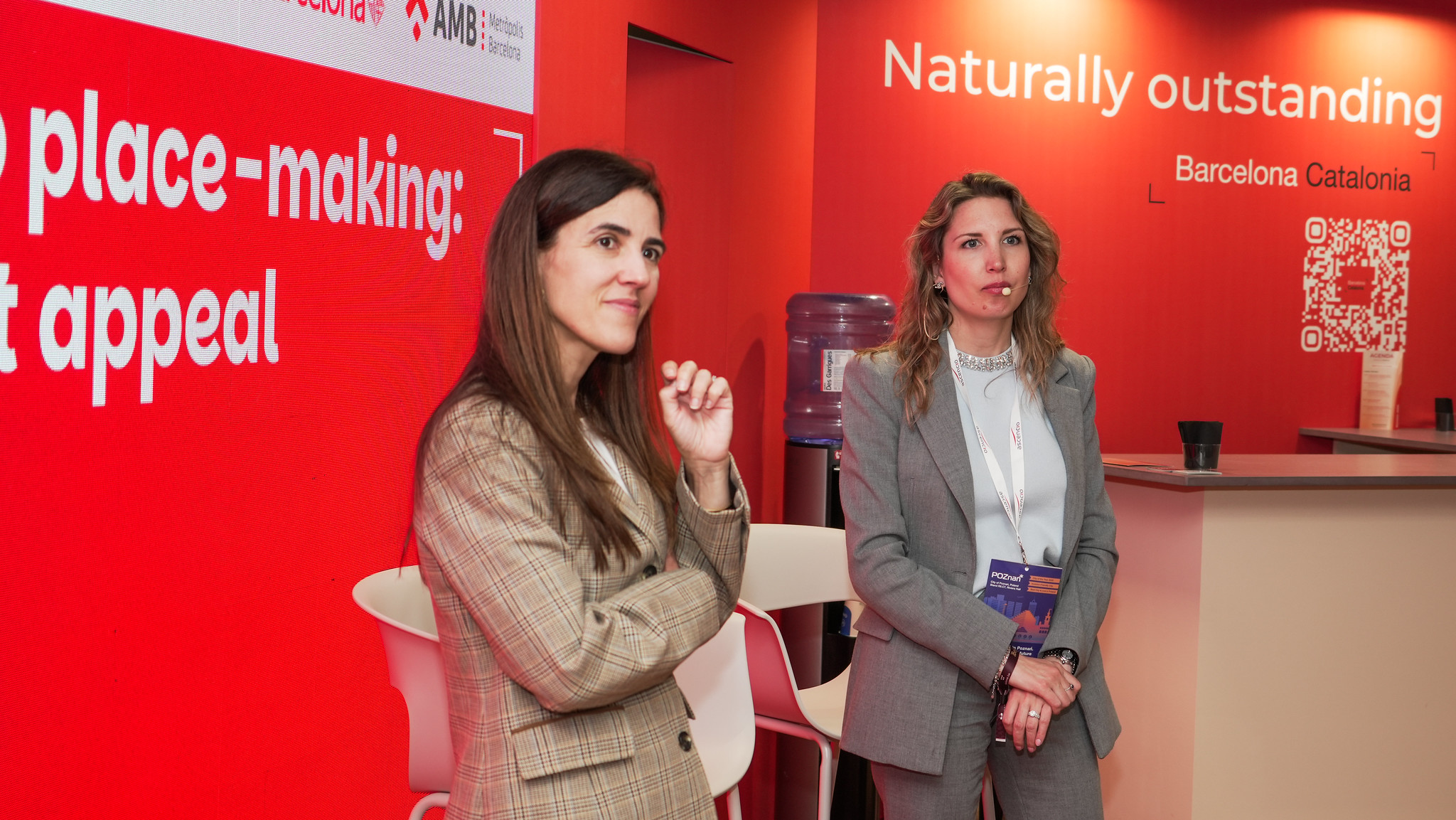
Retail real estate: resilience, liquidity and capital rotation
From urban regeneration the discussion moved to retail, exploring how the sector is evolving from transactional shopping space into curated destinations embedded in their catchment areas. The roundtable brought together Vanessa Gelado, Senior Managing Director and Head of Southern Europe at Hines, and Aurore Anbergen, Investor Relations at Ascencio, offering perspectives from both global institutional capital and listed real estate investment structures.
Vanessa Gelado argued that the retail sector has proven more resilient than many expected. For investors who entered the market at the right point in the cycle, the current environment confirms the validity of that strategy. Liquidity is returning and exit channels are functioning again, enabling investors to rotate mature assets and recycle capital.
Her perspective is particularly relevant given her dual role as Chairwoman of HLRE Socimi, the company created following the integration of Lar España with Helios RE Socimi after the takeover led by Hines and Grupo Lar. The platform now manages a retail portfolio valued at around €1.34 billion, financed through an €810 million refinancing agreement with Morgan Stanley and Banco Santander. Recent disposals of mature assets illustrate the company’s strategy of optimising its portfolio while maintaining exposure to strong retail fundamentals.
From the perspective of Belgian REIT Ascencio, Spain remains a strategic growth market, particularly in out-of-town retail parks and supermarket-anchored formats. Ascencio’s investment philosophy remains deliberately focused: supermarkets between 2,000 and 12,000 sqm, retail parks and clusters located on the outskirts of urban areas with strong catchment areas. Across Belgium, France and Spain, the company manages 100 properties totalling more than 442,000 sqm, generating over €53 million in annual rental income and maintaining occupancy levels close to 97%.
Despite the attractiveness of the Spanish market, access to opportunities remains challenging. Many assets are controlled by local owners or traded through off-market transactions, making entry difficult for new institutional investors. Nevertheless, both speakers agreed that the sector’s fundamentals remain strong, with rising footfall, improving tenant sales and stable occupancy levels supporting investor confidence.
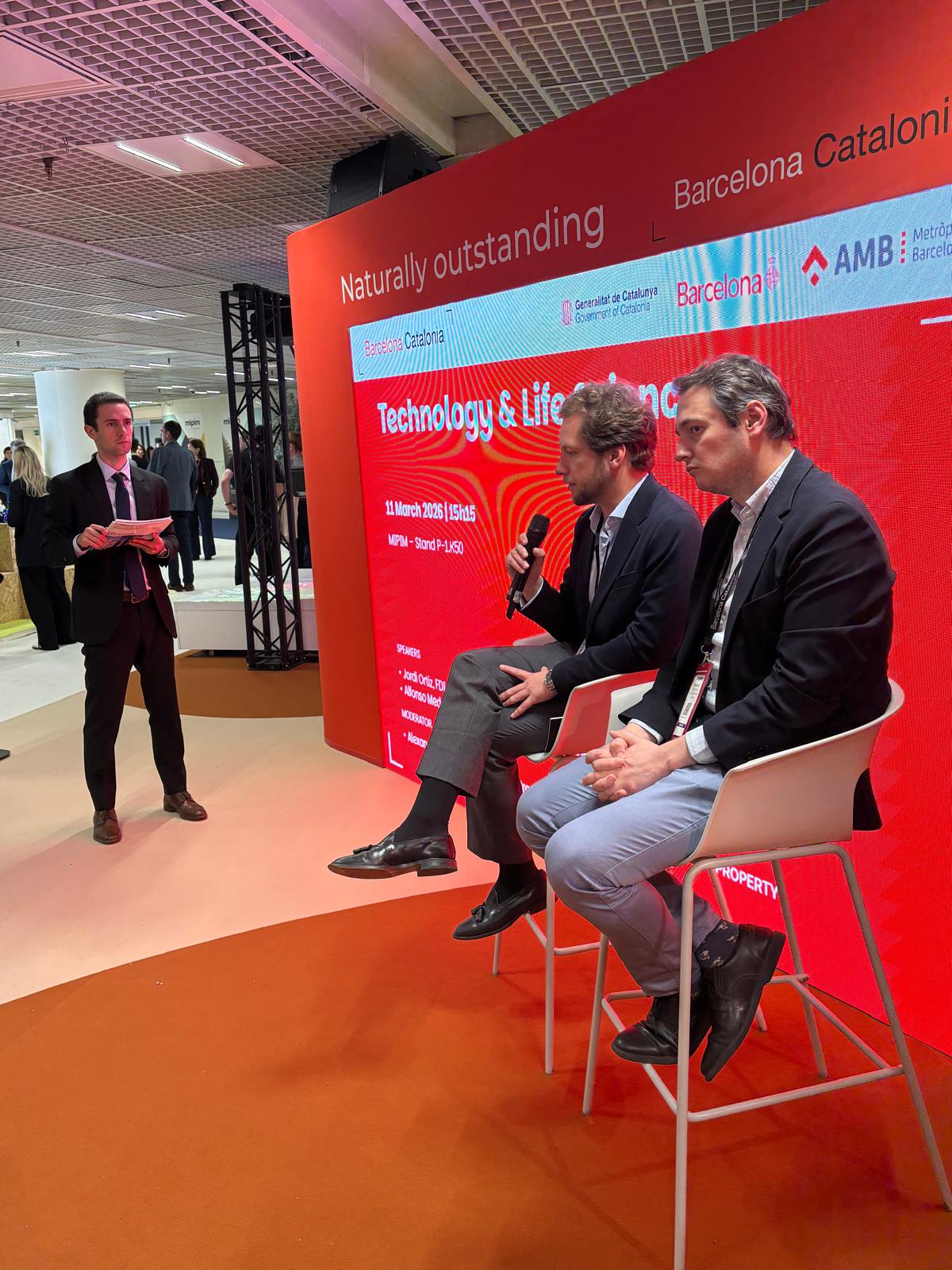
Technology and life sciences real estate: pricing innovation-driven assets
After the lunch, Investor Talks shifted to the rapid expansion of technology and biomedical industries is creating demand for a new generation of real estate assets. The conversation between Jordi Ortiz, FDI Director at Catalonia Trade & Investment, and Alfonso Medem, Senior Portfolio Manager of DeepLabs/ESIRE, explored whether Catalonia’s innovation ecosystem has sufficient depth to sustain long-term demand for laboratories, research campuses and specialised offices.
Catalonia has developed a strong life sciences cluster over the past decade, supported by universities, research centres and hospitals. Multinational companies such as Bayer and AstraZeneca have chosen Barcelona for significant research activities, reinforcing the city’s international positioning. Jordi Ortiz defended that this phenomenon expands beyond Barcelona itself, municipalities including Esplugues de Llobregat and cities such as Girona are also strengthening their role within the regional life sciences ecosystem.
From a real estate perspective, however, science-driven assets differ significantly from traditional office developments. According to Medem, laboratories require higher capital expenditure, specialised infrastructure and longer development cycles, meaning investors must incorporate scientific expertise into their teams in order to properly evaluate projects.
Ventilation systems, energy requirements, laboratory equipment and technical specifications all influence investment decisions, making underwriting more complex than in conventional office markets. Because of this complexity, life sciences developments typically command higher return expectations, reflecting the additional risks associated with development timelines, capex intensity and tenant specialisation.
Catalonia’s institutional ecosystem plays an important role in mitigating these risks. Organisations such as Biocat actively promote the region’s biomedical sector internationally, while the regional government continues to develop financing tools to support early-stage companies and attract global investors. Looking ahead, the region’s innovation strategy extends towards 2035, aiming to consolidate Catalonia as one of Europe’s leading life sciences hubs.
Planning the biomedical city: Barcelona’s long-term vision
The final session of the day — part of the official conference programme — has been very much aligned with the previous topic, further expanding the discussion to the scale of metropolitan planning.
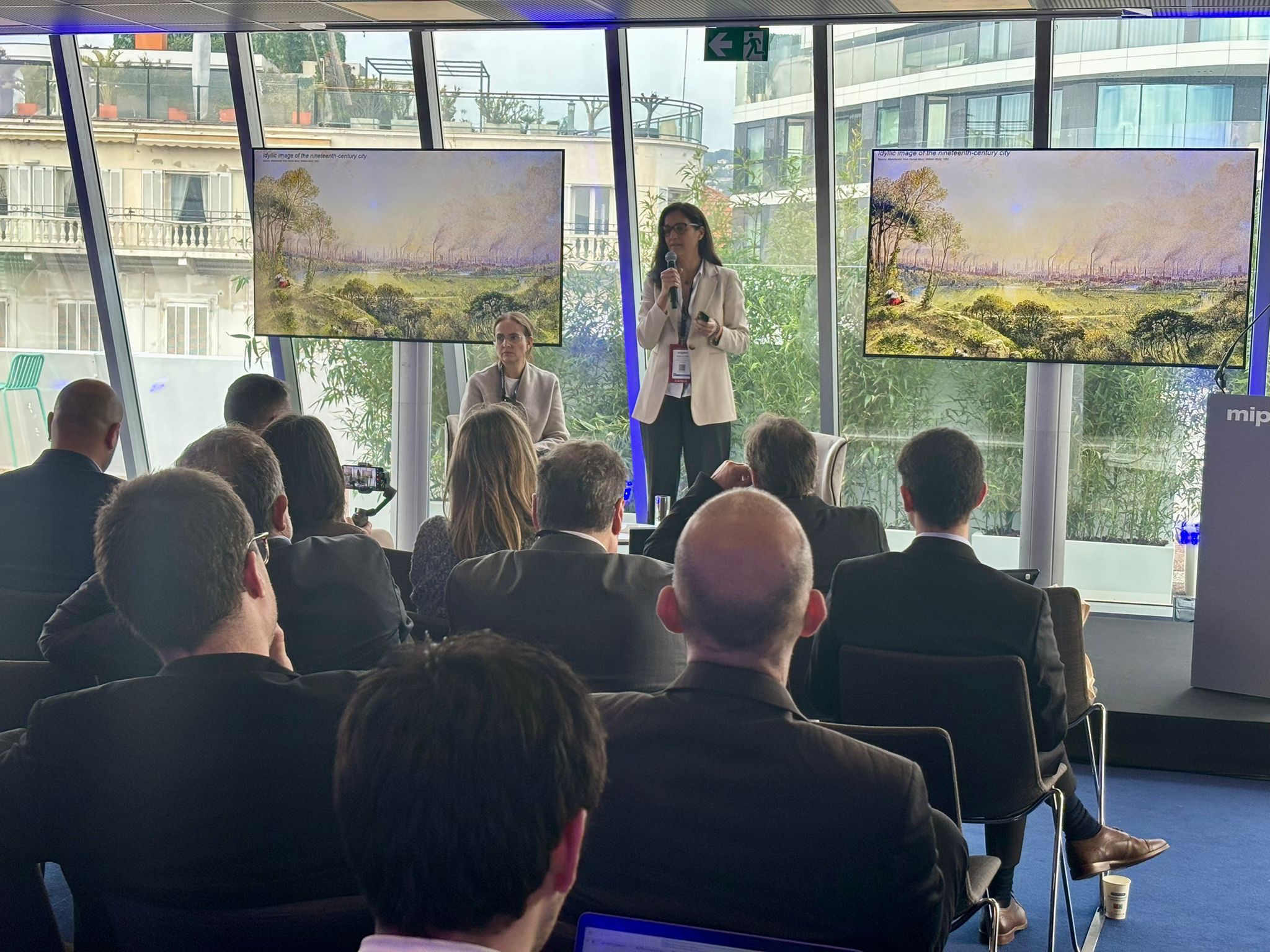
In a keynote titled “The New Biomedical Hub: Redefining Life Sciences in Barcelona Catalonia,” Bàrbara Pons presented the strategic vision of Barcelona Regional for integrating healthcare infrastructure into the city’s long-term urban development.
Rather than treating hospitals purely as medical facilities, Barcelona’s planning strategy views them as multi-layered urban infrastructure combining healthcare services, academic research, education and economic activity.
Two projects illustrate this approach: Porta Diagonal and the future Campus Clínic. The Campus Clínic project will relocate and expand the historic hospital complex into a much larger biomedical district designed to host hospitals, research centres and innovation companies. The first development phase will transform approximately 10 hectares, while the broader project could extend across up to 60 hectares spanning three municipalities within the metropolitan area. An international architectural competition will soon define the design of the campus, with construction expected to begin around 2030 and completion targeted for 2035.
Looking ahead to the final day
The Barcelona Catalonia Talks will conclude tomorrow with a final series of discussions addressing metropolitan cooperation, science-driven urban development and logistics infrastructure.
Sessions will include a regional dialogue between Barcelona and Lisbon, presentations on the development of Parc de l'Alba, and a closing roundtable on Catalonia’s role as Southern Europe’s logistics gateway with executives from Prologis, Valfondo and JLL.
Join us at the Barcelona Catalonia Pavilion - Stand P-1. K50

