


The 10th edition of the Portugal Real Estate Summit, organised by Iberian Property and held at the Hotel Palácio Estoril on 14–15 September, brought together more than 400 property investment professionals from around 20 nationalities.
Digital infrastructure featured prominently in the investment debate, with Portugal increasingly competing for large-scale data-centre projects on the combination of renewable energy, connectivity, land and grid capacity.
For Ana Quelhas, EVP Hydrogen and Data Centers at EDP Renewables, the fundamentals are already in place. Portugal combines wind and solar resources, a highly decarbonised electricity system, connectivity, land and talent, while recent government initiatives around very large grid connections and the national data-centre plan suggest that the authorities understand the scale of the opportunity. “We have all the fundamentals,” she said. “The ingredients are there. We just have to be smart in really taking advantage of these ingredients and be able to attract the investment.”
Filipe Barreiro, Operations Director at Start Campus, believes Portugal has now moved beyond the stage of being competitive only on paper. Start Campus is operating its first data-centre capacity at Sines, while developing the second building of its planned 1.2GW campus, a project that he says demonstrates that international customers are prepared to deploy advanced AI infrastructure in Portugal. “It is no longer on paper, it is reality,” Barreiro said, pointing to the deployment of advanced NVIDIA infrastructure and the international recognition received by the Sines project.
The scale of institutional commitment is even more clearly illustrated by Merlin Properties. Asked about the balance between Portugal and Spain, the listed company CEO Ismael Clemente said the company is currently developing around 200MW in Portugal, with approximately €500 million of CapEx already incurred, rising to more than €1 billion by December next year and €2.2 billion by December 2028.
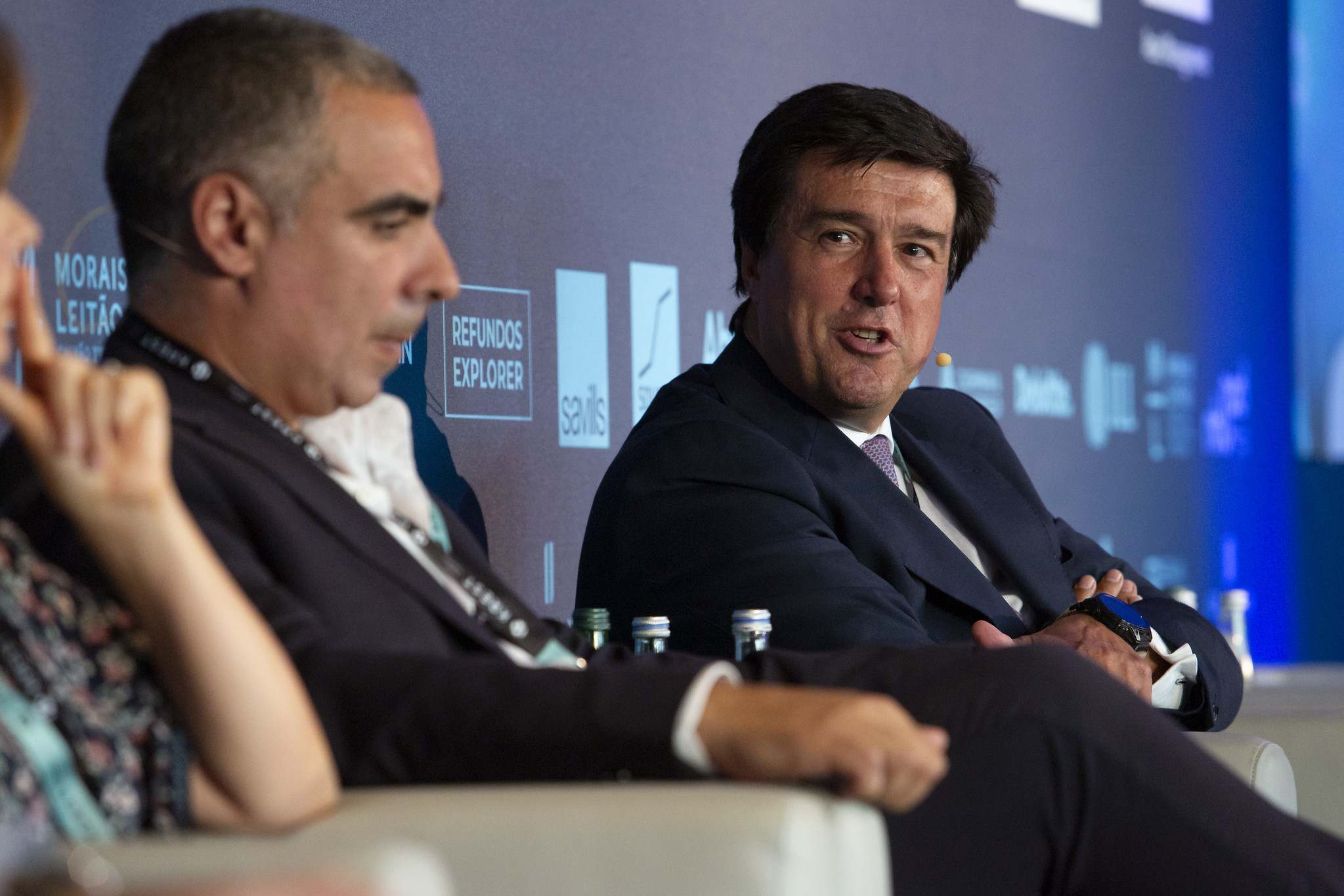
Merlin's approach is to build and retain a platform rather than trade individual assets, reflecting its REIT structure and focus on recurring income. Within that platform, the demand profile is changing rapidly: while Merlin operates across cloud and other segments, AI represents around 80% of its data-centre business, with hyperscalers increasingly joined by new cloud providers and former AI model trainers becoming operators themselves. The implication for real estate is that investors are underwriting infrastructure for a customer base whose power density and technical requirements are changing substantially.
For Ismael Clemente, Portugal's advantage over Spain is also becoming visible at government level. “Generally speaking, the Portuguese government really got it,” he said, pointing to the national data-centre plan, while describing the political tone around data centres in Spain as more inconsistent. On the electricity side, however, he sees a requirement for the whole Iberian system to adapt to a future in which data-centre demand represents a much larger share of consumption.
How to de-risk large platforms and ensure scale
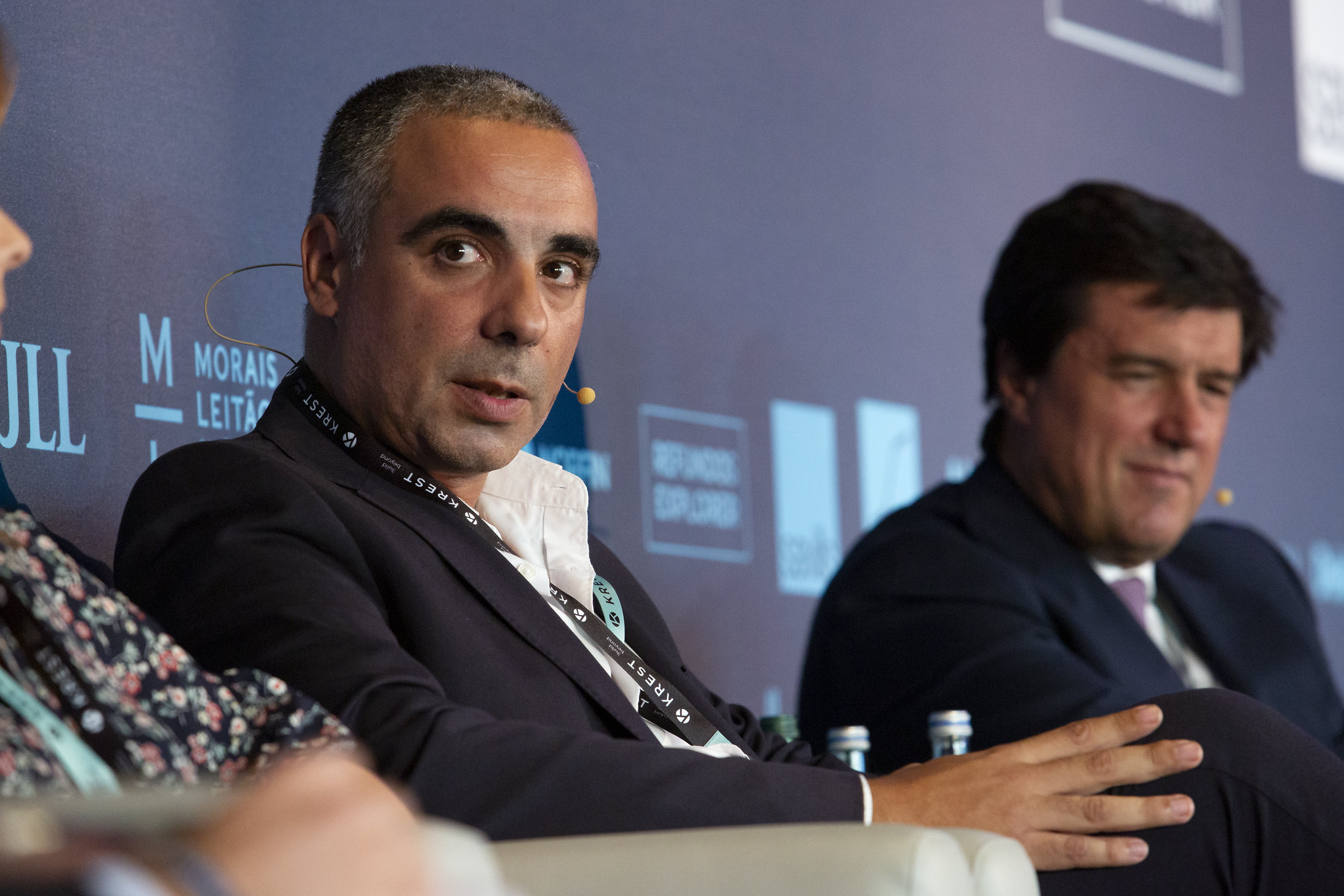
With the first 36MW already operational and the second 200MW building under development, the next challenge for Start Campus is not simply constructing capacity but matching it with customers and the infrastructure required around it. Barreiro said the second building is being developed with customers already secured, unlike the first investment, which involved greater capital exposure before demand was contracted.
At the scale envisaged for Sines, the surrounding infrastructure becomes economically relevant to the investment itself. Barreiro estimates that the various projects in the area could involve 7,000–9,000 workers, potentially bringing another 14,000–15,000 people into a town with around 30,000 inhabitants. Housing, logistics and talent therefore become practical constraints on the pace at which capacity can be delivered and operated, rather than secondary considerations for the local market.
More power — and smarter use of existing infrastructure
Ana Quelhas argued that Portugal will need both additional electricity infrastructure and better utilisation of what already exists. The traditional grid was designed around large, concentrated generation and relatively distributed consumption; data centres are creating the reverse situation, with very large and concentrated loads.
“We have GW-scale demand in a country that has a big load of 10 gigawatts, so it's really a systemic impact,” she said. EDP Renewables sees opportunities to use existing generation and grid connections more efficiently, including through greater integration between generation and large loads, but new investment in both grids and generation will still be required. On the question of who should pay, Quelhas's principle was that infrastructure benefiting a specific project should be borne by that developer, while wider investments benefiting the electricity system should be shared more broadly.
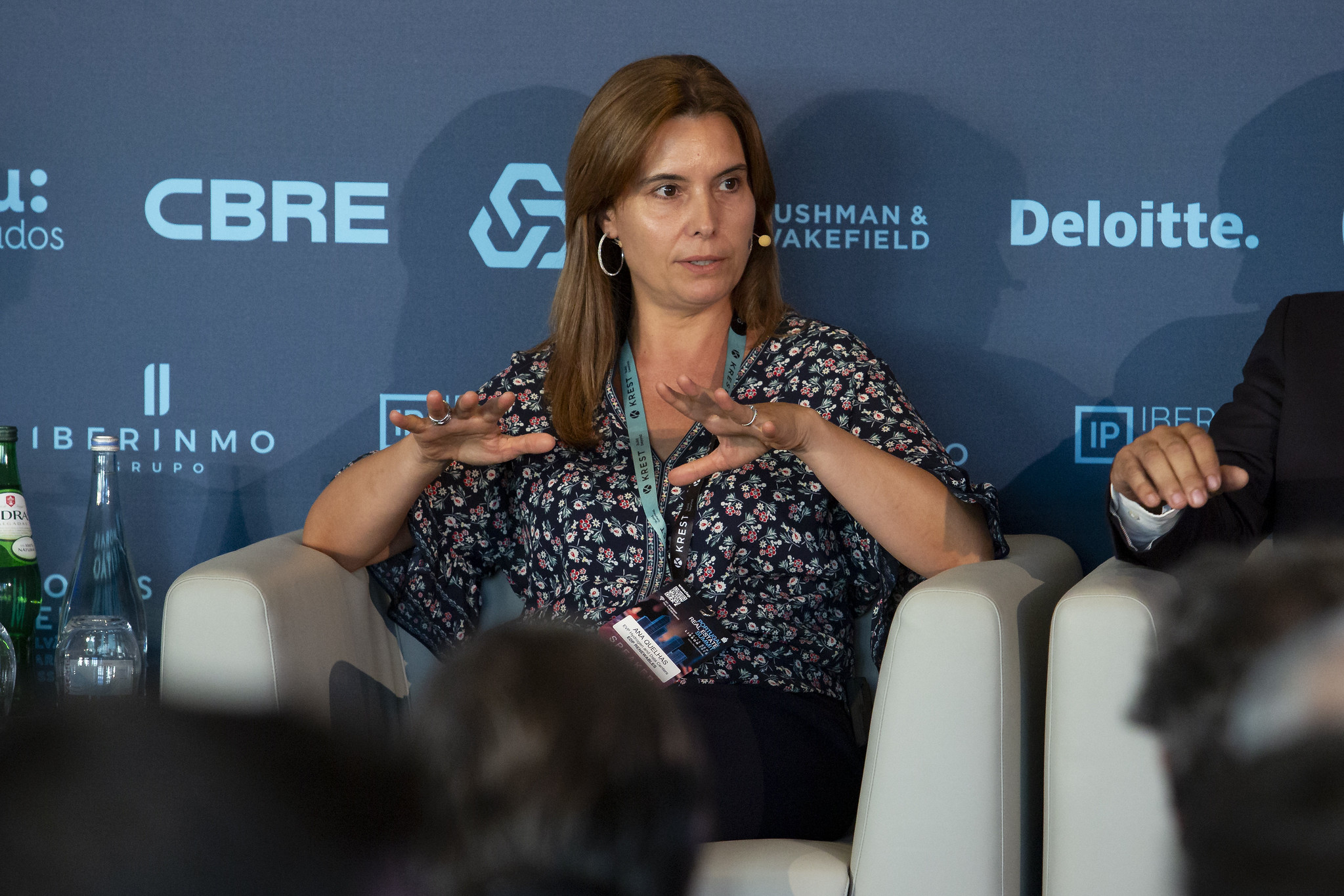
Ana Quelhas, EVP Hydrogen and Data Centers, EDP Renewables, at the Portugal Real Estate Summit 2026.
AI is changing the specification, not necessarily shortening the life of the building
The rapid development of AI hardware raises an obvious concern for investors: whether today's data centres could become obsolete before their economic life has run its course. Ismael Clemente argues that the industry often confuses the rapid evolution of software (or even computing hardware) with the physical infrastructure housing it.
For Merlin, obsolescence occurs when a building can no longer accommodate the weight, power or cooling requirements of new equipment. Yet rising rack densities can actually reduce the amount of physical space required for computing capacity: Clemente contrasted traditional 12kW racks with configurations reaching 60kW and potentially 120kW using liquid cooling. “If your racks go to 120 kilowatts because you are refrigerating with liquid, you are using in reality one-tenth of your room,” he said. For the landlord, therefore, the critical question is whether the building has sufficient structural, electrical and cooling capacity to accommodate successive generations of technology.
Power is becoming more important than traditional location
That leads directly to another change in the real estate equation: the relative importance of location. “It's more power and grid,” Clemente said, although he stressed that latency remains critical for applications such as gaming, algorithmic trading, surgery and some IoT uses. For many AI workloads, however, a modest increase in latency is immaterial, opening up a much wider geography for computing capacity.
Portugal can therefore serve workloads well beyond its domestic market. Clemente pointed to latency of around 30–40 milliseconds to the US East Coast as an indication of why Portugal can potentially support US computing requirements, particularly where ultra-low latency is not essential. In this context, access to large quantities of power, connectivity and efficient cooling can create a stronger location premium than proximity to the end user.
The economics are increasingly measured in kilowatts
The changing economics of data centres are also visible in leasing. Barreiro recalled that when he entered the industry around 20 years ago, customers effectively paid for the amount of space they occupied. Today, the commercial proposition is increasingly based on power allocated to the customer, with efficiency becoming a direct component of the asset's economics.
That is particularly relevant as cooling and electricity infrastructure account for a significant part of the capital invested in the asset. At Sines, the use of seawater cooling associated with the former coal plant was one of the factors supporting the site's selection, while Barreiro also stressed that the common assumption that data centres necessarily consume large quantities of water does not apply universally.

Where can investors enter?
Asked where an investor with capital to deploy could gain exposure to Portuguese data centres, Clemente identified a spectrum of opportunities. At the upstream end, land and power provide what he described as an attractive development position; investors can also participate directly or indirectly in the construction and operation of data centres, while banks have opportunities to finance assets using structures with project-finance characteristics.
A further opportunity exists in edge data centres, which Clemente expects to serve applications requiring very low latency. These are much smaller facilities, typically around 1–2MW, and can be located closer to end users, including in urban areas where securing substantial additional power is difficult. That makes them a materially different proposition from the very large campuses and potentially opens the sector to investors unable to commit the capital required for hyperscale developments.